Wednesday, July 24, 2013

WHO'S ART DIRECTING MANILA'S BILLBOARDS?


(As it appeared in Mumbrella, specisl thanks to Robin Hicks)

While doing my usual morning rounds to check on emails and messages on social media, I saw a post on Facebook that read: “One step behind, that’s Philippine advertising. Billboards look like print ads, print ads look like leaflets, radio commercials are spoken print ads and TV ads are radio scripts with pictures.”

While some people might think that it’s a sweeping generalization, truth is, I have long wanted to make the comment that the heyday for billboards has passed, but held back for as long as I could, so as not to annoy friends in the industry.

But a former chief creative officer and CEO of a multinational ad agency beat me to it and validated my fears: billboards in Manila, indeed, are increasingly resembling leaflets or fliers, he says.

I would have to agree. While Manila has won Cannes Lions, Clios, One Show Pencils and Spikes, is home to many talented people, has a vibrant local creative awards show, and is one of Asia’s most prolific entrants to the world’s biggest advertising festivals, the city is flooded with billboards that look as if they were created by salesmen.

Choke me to death seems to be the covenant when local Gods of outdoor media descended into this tropical eden. Words are aplenty. Layout chaos is the order of the day. Forget about the awards book.

Suffocate every available white space seems to be the standard rule.

Mix and match (or ‘halo-halo’ as we’d say in the Philippines) the fonts. The more, the merrier, it seems. Could it be because halo-halo is also a favorite Pinoy dessert?

The city has seen many great, globally applauded campaigns like Coca-Cola’s 60 X 60 foot ‘Living billboard’, a sign made up largely of living plants, which absorb carbon dioxide (made by McCann WorldGroup Philippines).

Ogilvy Manila's Ponds billboard

Ogilvy Manila’s Ponds billboard

Ogilvy Manila produced a number of category-breaking outdoor ads for Pond’s way back in 2007, including a red light on the cheek of a woman’s face that lit up like a pimple. Sad to say, bad billboards dominate the good on Manila’s cluttered skyline now.

And as skyscrapers boom and mushroom in the city, the bad ones grow in number. One only needs to cruise along a stretch of Edsa (Manila’s busiest highway), from Monumento to SM North to Cubao, Shaw, Boni and Guadalupe to see the spectacle of screaming billboards.

Many marketers, even some advertising practitioners, today seem to think that a billboard peppered with lots of hard-sell messages will be more effective. Not so. They just cause more accidents and traffic chaos on the road.

Thursday, July 18, 2013

WHAT MAKES AN AD EFFECTIVE AND WIN A WORLD TITLE?


by Roger Pe

A product so good will sell without advertising. Word of mouth will fan the flame but it can only do so much.

Creative advertising, as relevant as it is interesting, will make the categorical difference.

It will multiply sales figures many times over, boost profits and take the brand to charts advertisers never imagined.

A product so bad will nose-dive as soon as it’s launched.

The sad story is, no amount of advertising will increase its market share. On the contrary, it will only hasten its untimely demise, as more and more people will discover how bad it is.

Rather than expose its flaws, it’s wiser to invest on product improvement. In a sea of brands, nothing beats brand superiority.

A damn good product is the alpha and omega of effective advertising.

Whether on digital, social media, below or above the line, or through guerilla tactics, advertising, cut-through advertising that is, is a potent marketing strategy. When you are target-focused and your message has a single-minded proposition, it also becomes a double-edged sword.

A great product is a creative sparkplug, a fountain of ideas that can trigger boundless executions, a surefire formula that can make cash registers ring merrily, continuously, and to effect what every marketer wants. Sales.

How does the biggest advertising festival in the world choose the most effective ad campaign then? Here’s a brief rundown:


In Cannes’ Creative Effectiveness competition, and as the category suggests, an entry cannot win by creativity or effectivity alone, or without the other. It’s effectivity that is creative and creativity that brings in the numbers.

Many marketers, even advertising practitioners today still have that mistaken notion that an effective ad is an ad that have loads of hard-sell copy, big price balloons, a product freight that barks the brand name more than three times and you can sweep creativity under the rug. No.

Cannes is Cannes, and here, entries must be creatively outstanding from a strategic standpoint. More importantly, it must have shown a proven impact on a client’s business backed by real and audited figures.

Cannes Creative-Effectiveness has become an essential part of an ad industry trend that recognizes actual marketing effectiveness with great creativity.

“As ad agencies continue to face client adspend uncertainties and they’re pressured to prove they can boost the client's bottom line, as well as produce a great-looking ad, ad festivals that focus on this become very relevant,” a local ad agency CEO stresses.

According to Guy Murphy, JWT Worldwide Planning Director and Cannes Creative-Effectiveness judge, Cannes Creative-Effecftiveness Lion is difficult to win.

“There were 142 entries in 2011, and only six winners were picked,” he says. He advises prospective entrants to focus on proving the actual effect of the campaign when writing the case study, ahead of the campaign's creativity or strategy.

Proving effectiveness, above all, is now a numbers game. Using consumer data from a variety of sources is essential. "You'll need more numbers than you think. A few quotes from consumer focus groups and one percentage figure won't get you very far,” he adds.


To be able to qualify in Cannes Creative Effectiveness Lion, a campaign must have already been shortlisted or won in the immediate preceding year, been judged and established as creatively world-class.

Entries are rewarded 25% for strategy, 25% for creative idea and a big 50% chunk for market results. The fee is €1,225 per entry, roughly 69,800 pesos.

The rules clearly stipulate that ads must have been made with prior written permission from client, owner of all rights written in the entry form. Entrants must provide organizers with a ready copy of that permission.

All entries must have been made within the context of a normal paying contract, meaning, the client must have paid for all, or majority of the media/production costs.

The rules are strict. Cannes provides stringent measures, such as:

All entries must be submitted for judging exactly as published, aired or implemented and may not be modified for awards entry. It is common knowledge that, locally and internationally, some ad entries are different from what actually came out on media.

A full media schedule and other proofs are to be attached to the entry form to verify authenticity of the work in the event the entry is shortlisted or becomes a winner. In cases of complaints against any winning or shortlisted entry, the organizers conduct a full investigation.


Deliberation

Judging is done by the best minds in the industry, some of them multiple Cannes winners themselves, who have “been there, done that.”

The process is Hollywood-style. A welcome party starts the ball rolling. Introductions of rules come next and the judging proper begins.

The jury looks at entry case videos and every physical piece. They are usually looking for simple ideas, smart but not confusing execution, unusual strategy, and most important of all, the measurable results.

A former Cannes jury member gives this advice: “Nobody reads long body copy and preparing your presentation case study intelligently could improve chances of winning. Showing numbers in results and not in percentages, also works better.”

A jury head does not vote, but only acts in cases of deadlocks. Votes are then shown on screen. This year, only the Grand Prix winner was chosen.

If an ad agency entry is up for the top plum, its jury rep is asked to leave the room. When the results are up, a press conference follows and awards ceremony ensues.

How judges are chosen

Be a Cannes winner yourself and live in a Cannes-crazy country that sends lots of entries every year, that is de rigeur.

According to Phil Thomas, 6th time CEO of Cannes and responsible for naming judges to the festival, there are about 300 judges each year. He has named 1,800 judges during his term.


“If you’re a country that’s entering and winning big in a category, you’ve earned your right to have a jury member above a country that’s not entering and not winning.”

Countries that get the most judges are U.S., Brazil, U.K., Germany, France, Australia, India, Canada, Japan and China.

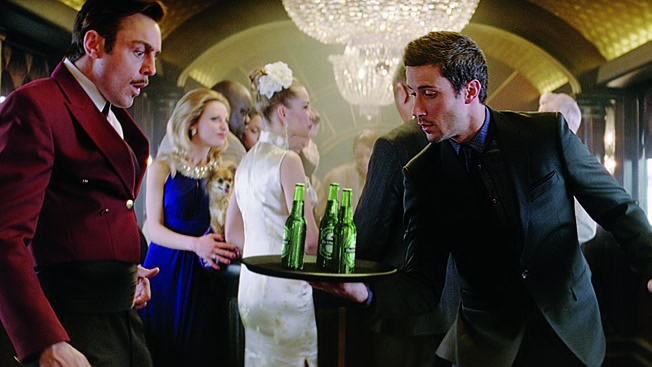
This year’s Cannes Creative-Effectiveness Lion winner is Wieden & Kennedy Amsterdam’s work for Heineken: "Legendary Journey: Justifying a Premium the World Over.”

The global campaign dramatized significant increases in market shares in every country it was being sold. Its most high-profile element was a highly detailed video, "The Date," in which a suave gentleman takes a beautiful woman for a legendary night out.

The guy shows off skills, ranging from fileting a fish to performing magic tricks. The campaign also included online integration, such as contests where entrants could try to win their own legendary dates.

Jury chairperson Shelly Lazarus, chairman emeritus of Ogilvy & Mather, cited a host of factors that contributed to the campaign's win. These included the difficulty in creating a global platform that translated successfully in widely varied local markets, the toughness of differentiation in the beer category, the inspired execution and idea, and the impressive results in driving sales, volume, and maintaining a price premium for the brand.

As the name suggests, the awards reward campaigns that marry creativity with business effectiveness. Pricewaterhouse independently audited all business results from 120 entries.

Seven campaigns picked up gongs in total, across a wide variety of sectors and fulfilling a broad range of business goals, explained Lazarus.


The Gunn Report, the annual compilation of the most awarded advertising campaigns in the world, makes conclusive findings: the more creatively awarded a campaign is, the more effective it becomes.

“They are more effective than non-awarded ones despite lower levels of ESOV, (Extra Share of Voice). Furthermore, highly creative campaigns are more reliable investments as they achieve broader levels of successes across greater number of business metrics,” it adds.


Thursday, June 27, 2013

THE CHAIRMOM WINS CANNES GRAND PRIX LION


by Roger Pe

As of the latest count, the world’s population is a little over 7 billion, more than 6 billion of which are mobile phone users.

The top three users are China, India and the US. If you’re curious, the Philippines ranks number 10 (106,987,098), bigger than its human population, based on Wikipedia’s list.

Americans replace their phones every 22 months, junking some 150 million old phones in 2010 alone.

Do you ever wonder what happens to old phones when they die? In China and India, for example, people pile e-waste and burn it so they can extract gold, silver and copper threads inside, which they sell to recycling merchants.

In the Philippines, millions of old, analog phones don’t end up as toxic waste but are reborn to create a new brand of textbook to make Filipino children learn to read fast.

Credit an ad agency that collaborated with authors and publishers to refine school lessons into 160-character messages and a telecom company that programmed them into inboxes of thousands of inactive surplus sim cards.

What turned out gave them amazing results: old analog phones became a new type of e-reader and old text sim cards became a new brand of textbook called “TXTBKS”.

A simple idea that catapulted the Philippines to win its first ever Grand Prix Lion, the highest creative award in the world’s biggest and most prestigious international advertising festival, Cannes.

Business Friday interviews the ‘Chairmom’ who’s given the Philippines’ its biggest advertising award so far, Merlee Jayme, Chair and Chief Creative Officer of DM9 JaymeSyfu, now the country’s poster ad agency. She also gives us interesting snippets from her rainbow-colored career.

BF: How did you start in advertising?

MJ: I had my practicum at JWT - then in Magsaysay building along Roxas Blvd. Jun Alcantara, who was heading the internship program asked each one of us one question: “Which department do you want to join: Accounts, Creative or Media?” Clueless just like the rest, I crossed out ‘Accounts’ thinking it would entail a lot of math.

I also crossed out ‘Media’ thinking that would get me exposed to showbiz and I was just too shy for that! So I finally chose ‘Creative’. I knew it would be perfect because I draw and I write.

Here, I got to experience writing and even presenting to real clients. But only when Mr. Jayjay Calero chose my team for the best ad campaign for Kodak did it dawn on me that this was my future career.

BF: Tell us about your early days in advertising, particularly Ace-Saatchi.

MJ: The day I was interviewed to be Mario Monteagudo’s partner was my most memorable. When I got in Ace Saatchi & Saatchi’s reception area in the old Rufino building, I noticed everyone was in high spirits.

In fact, there was a celebration. Then I gathered, there were creative teams who just came back from Bangkok and brought home the grand prize from their regional competition.

Mario, my future partner, was one of them. Seeing me sitting there, they called me and gave me a copy test: Their Bangkok competition brief!

After a short interview with Cid Reyes, which was so scary, I remembered Jimmy Santiago, the ECD then, telling me that I could bring the brief home to work on it.
Then something came over me. If I wanted this so badly, I should at least try to impress them. I demanded for an empty room, a pencil and some papers. I told them I’ll work on it that same day and will present before 5pm. I got the job.

That was 1989. It was also an Advertising Congress Year. I watched my creative colleagues endlessly go up the stage. It was the most inspiring feeling. I vowed to myself to learn, to work doubly hard and to catch up with these guys.

Under Mario’s guidance and patience, I won my first gold in the following Advertising Congress for Cocobank “Origami” TVC. That was the first time I felt I was truly “Saatchified”.

BF: To whom do you attribute your success, who influenced you so much?

MJ: Malcolm Gladwell would always refer our ‘training’ for excellence to “10,000 hours”. My “10,000 hours” for copywriting came from my 3 years with Mario Monteagudo. He was equally ruthless and fair.

He continuously pushed me to write the perfect headline, body copy and punch line everyday. It was absolutely impossible to be mediocre around him.

When a line isn’t funny enough or when a story isn’t memorable enough, you’re dead. So, I would always make sure to come up with something that will blow him away. And, if he saw an idea to be a very good one, he never hesitated in giving me the credit for it.

My “10,000 hours” for art direction was with Melvin Mangada. He was probably the country’s best Art Director. He had such a sharp eye that nothing-absolutely nothing escapes it.

Headlines too big, fonts are too playful, photos need more re-touching, and layout should be simpler. He had a flair for ideas perfectly executed.

My “10,000 hours” for leadership was with David Droga. I’ve never met a more charismatic guy. He was the type of leader who was so humble that he wanted all his teams to shine more than himself. Of course, that was a bit impossible in his case. He taught me how to bring out the best in everyone.

BF: How do you begin doing an ad, any mental ritual?

MJ: The brief is very important. I tell my creatives this every single time. First, when a brief is very complicated - with the message buried or has so many layers, my mind literally shuts down. So, it’s only natural that I give my inputs or will even re-write it if need be. It has to inspire us creatives.

First I ask, what problem are we here to solve? Which is the best way to solve it?
What is the best way to involve consumers?

Take note “involve” and not simply reach or create awareness. With digital, ambient and events, we try to stop thinking of conventional ways to ‘involve’ the target market. Then I open a bottle of red.

BF: Who is Merlee Jayme as a private person?

MJ: I’m a mom to four girls (with ages: 21,18,12,10) they’re like my friends. Every year I bring one daughter out of the country with me to spend some “just-us” time.

I’m a wife to Timmy, an ad agency COO. Our bonding time is usually an early morning run. We’ve joined 21k runs and love running in different parts of the world. On Friday nights though, no run can stop us from having a beer or two in a cozy bar somewhere.

Lastly, I’m a pretty religious person. Deep in my heart, I truly believe that He can give your talent today and He can take it away anytime, too. So I don’t take things for granted. I thank Him greatly for every award we win and for every pitch we lose.

I also make sure I come home in time to pray with my daughters before bedtime.

BF: What is your style of management?

MJ: They call me the “Chairmom” of DM9. Honestly, because that’s how my management style is, a little bit of a disciplinarian, hands on, and very nurturing. I am also very protective. Nothing angers me more than my DM9ers being treated badly or unfairly.

I also believe in leading by example. I take accountability to heart. So I’m never afraid of getting my hands dirty. I write, I board, I brainstorm, and I attend shoots. I come in early and leave late if I have to.

But being a creative myself, I have to say I have my usual “crazy” and “just want to have fun” moments. I come up with the weirdest ideas for agency team building, wear outrageous costumes and party hard.

BF: Now that you have achieved a Cannes Grand Prix, where do you go from here?
MJ: How I wish I could ‘rest’ a bit. The Cannes Grand Prix is simply a proof that we are on the right track in helping create change for the country and the world.
So, we have to continue on. We still have a big task ahead.

BF: Is there a formula in winning Cannes?

MJ: There are tips to make sure your entry is going to be understood by different nationalities. But I don’t think there are formulas, only great ideas. Every year, Cannes surprises us.

BF: What drives you as person and as Chair of DM9?

MJ: Maybe seeing my name on the door everyday makes me feel 100% responsible for so many people and the work.

As of the latest count, DM9’s has extracted the most precious metals from some of the world’s major award shows. No other ad agency at same age has achieved in its entire 8-year history.

2009
Campaign Brief Philippines Asia Agency of the Year
2010
Bestontv.com Ranked no. 9 in the world, and only Asian agency making the list

HALL OF FAME , Kidkat/Creative Guild
New York Festivals Creative Achievement Award
Gabriela "Nat Geo" - Finalist, Radio

NEW YORK FESTIVALS:

THE ONE SHOW:
Lasik Surgery "Before & After" - First cut, Poster
Music 1 "Obit Campaign" - First cut, Poster
Gabriela Philippines "Duct Tape campaign" - First cut, Ambient


CANNES LIONS:

Makati Fire Station "Match" - Finalist, Outdoor
Coppertone "Kobe" - Finalist, Outdoor
Coffee Dream "Parallel Universe" - Finalist, Radio
Coppertone "Speed" - Finalist Radio


THE WORK (inbook):

ProLife Philippines "Perspectives Campaign"
Extraderm Age-Defy "Clock"
Coppertone Sunscreen Lotion "Hidden Campaign"
Gabriela Spousal Abuse "Rope Campaign"
Coppertone Sunscreen Lotion "Emerge Campaign"
Makati Fire Station "Match"

2010
CANNES LIONS:
Silver, Outdoor for Mini Cooper
Finalists:

SPIKES:
Gold, Media for Gabriela “Bruise”
Bronze,
Bronze,

ADFEST:
Bronze, Outdoor Gabriela “Bruise”

2011
CLIO:
Bronze, Outdoor for Pharex
2012:
SPIKES:
Gabriela "Bury the Past" - Silver, Direct
Gabriela "Bury the Past" - Finalist, Digital
Gabriela "Manila Scandal Part 2" - Finalist, Digital

CANNES LIONS:
DOT & Smart Communications Domestic Tourism Campaign "Volcano" - Finalist, Outdoor
ABS-CBN Foundation Bantay Kalikasan "Mouse Deer" - Finalist, Press
ABS-CBN Foundation Bantay Kalikasan "Dugong" - Finalist, Press

CAMPAIGN BRIEF ASIA:
Direct Single Anti-Firecracker Campaign SFX
Outdoor Campaign Dept. of Tourism Volcano
Posters Campaign Vespa Scooters New York, Paris, Manila, Bangkok
Public Service Print Campaign Save Palawan Movement Pangolin, Mousedeer, Dugong
Public Service TVC Single Campaign Against Scandal Videos Hits


ADOBO DESIGN AWARDS:
Pharex "Cinema" - FINALIST, Best Design, Poster Category
Pharex "Opera" - FINALIST, Best Design, Poster Category
Pharex "Lecture" - FINALIST, Best Design, Poster Category

TANAW AWARDS:
Philippine Star "Truth" - Best in Creative Execution, OOH, Winner

AD STARS:
Gabriela "Hits" - Silver, Cinema, Public Service
Gabriela "Hits" - Finalist, Cinema, Diverse Insight

DIGITAL ASIA FESTIVAL:
Gabriela "Bury the Past" - GOLD, Best Use of Social Media

EPICA AWARDS:
Gabriela "Bury the Past" - GOLD, Public Interest Interactive
Gabriela "Bury the Past" - SILVER, Media Innovation

CAMPAIGN ASIA PACIFIC:
Agency of the Year 2012

2013

ADFEST 2013:

INTERACTIVE LOTUS
Best use of social media

‘Bury the Past’ GOLD,
Gabriela

PROMO LOTUS
Event & field marketing

Best use of social media

‘Bury the Past’ Gold
Gabriela
Direct ambient

Best use of social media

‘Bury the Past’Gabriela Silver

CANNES LIONS:
Grand Prix, Cannes Lion Festivals , 2013

Thursday, June 20, 2013

PHILIPPINES: GRAND PRIX IN CANNES AT LAST


by Roger Pe (First of 2 parts)

What if you could use millions of old, analog phones to create a new brand of textbook?

This was the germ of an idea that catapulted the Philippines to win its first ever Cannes Grand Prix Lion in the ongoing Cannes international festival of advertising creativity.

And so, the smartest idea wins it.

To put it simply, the purest idea reminds us all once again that it can conquer the world and make the world believe.

No Hollywood special effects in the mold of “Iron Man”, no state-of-the-art equipment to create mind blowing animation, no first world technology and talents to do the trick. Just an idea so relevant it made a lot of impact.

By this time, the whole advertising world is still heady over DM9 JaymeSyfu’s conquest of Cannes Grand Prix Mobile Lion introduced last year.

For those who are used to daily fare of slick and beautifully produced ads, DM9's entry will not even impress the jaded Cannes habitué.

Why, it looks like a powerpoint market case study. But there lies the sting. Skim through the surface and beyond the ordinary is a huge idea laced with the greatest of intentions: Make many Filipino school children learn to read fast.


The natural veneer of DM9’s “TXTBKS” made it shine the brightest in a category that drew over 100 technology-driven entries from first world countries, clearly one fine example of the agency's mantra: Small but credible. And if we may add: Relevant.

Advertising global bible Ad Age describes it as: “A clever way of using old-school technology. Rather than replace old analog cellphones, the agency dreamt of a way to make them beneficial to citizens.”

How DM9 did it.

It looked no further but right into the country’s state of education, where unlike in developed countries, tablets and e-readers have become the solution to large, voluminous heavy textbooks.

“We were working on a Smart project involving children and learning. We realized one of the ideas we'd brainstormed could be used to solve a bigger problem. That idea would become “TXTBKS,” says Merlee Jayme, Chair and Chief Creative Officer of DM9 JaymeSyfu ad agency.

Jayme and her team were aware of the need: how to make technology relevant to schools and make it easily accessible.

“Mobile is where digital is headed—in fact, many would say mobile is where it's been the past few years already. And it's where the most exciting advances are being made. Naturally, perhaps some were expecting technical pyrotechnics,” Jayme says.

But you see nothing of that sort in DM9’s case however. “What we simply set out to create was a solution to a problem,” she adds.

In DM9’s study, it found out that even the cheapest tablet model is worth more than what their families make in a month. Most families own one or two old analog mobile phones, used mainly for texting.

It also noted that kids as young as seven must bring up to 22 books every day, leaving them physically exhausted and unfocused even before their first class—and in many documented cases, afflicted with scoliosis.

The solution: "Make text light and easy".

Over six months, the agency collaborated with textbook authors and publishers to refine official school texts into 160-character messages.

They were then programmed into the inboxes of thousands of inactive surplus sim cards, which were then repackaged into new Smart TXTBKS.

What turned out gave them amazing results: the oldest analog phones became a new type of e-reader and old text sim cards became a new brand of textbook.

Results

A quarter after it was launched in partner schools that needed it most, the simple, low-tech solution made a sustainable impact.

School bags became 50% lighter, classroom attendance increased to 95% while average test performance went 90% during implementation.

Petitions and pledges from schools, families, and education sector members grew. TXTBKS literally went places, with more subjects and grade levels, rolling out across the Philippines.

Rei Inamoto, VP-chief creative officer of AKQA, an ad agency specializing in digital services and jury chair.

On Ad Age, jury members said that the simplicity of DM9’s work was what made it win. “I think it’s an unexpected Grand Prix winner. It’s not the most technically advanced entry, and in fact, it’s a little bit backward.”

Xavier Laoureux, head of the Digital Arts Network at TBWA, said what was “interesting about it - is that it’s the best way to show you can have a mobile idea without pushing the technology side of it. It was not using technology as the end.”

A total of 59 Mobile Lions were awarded, nine of them were Gold, not including the Grand Prix winner.

All nine Gold Lions were good enough to have won the Grand Prix, Mr. Inamoto said, but in the end, the balance tilted in favor of DM9’s “TXTBKS” entry because, at the end of the day, Mr. Inamoto said his suggested definition of Mobile Advertising was, “Is it portable? Is it connected? And is it pervasive?”


Credits:
Agency: DM9JaymeSyfu
Chair and CCO: Merlee Jayme
ECD: Eugene Demata
ACD/Copywriter: Aste Gutierrez
ACD Digital: Buboy Paguio
AD: Buboy Rayong
Account Supervisor: Alex Syfu
Account Manager: Ina Vargas
Producer: Carlo Perlas, Tower of Doom
Editor: Melo Samson, Tower of Doom

DM9 JaymeSyfu is part of DDB Group Philippines, whose Group Chairman and CEO is Gil G. Chua. It was Campaign Asia-Pacific Agency of the Year and is named after one of the most creative agencies in the world, DDB DM9 Brazil.

Thursday, June 13, 2013

CANNES: 60 AND STILL SEXY.


by Roger Pe

This is the 8th year that the Philippine Daily Inquirer serves as the official representative of Cannes, the world’s biggest and most prestigious advertising festival of creativity, in the Philippines.

As official representative, it drums up excitement for the global event, suggests jury members from the home country if applicable, picks the Young Lions competitors and organizes winners’ events in close coordination with the Creative Guild, the award-giving body of the Philippine 4A’s and PANA, Philippine Association of National Advertisers.


By encouraging ad agencies to test their mettle against the best in the world, the newspaper has helped the Philippines produce 1 Gold, 5 Silver, and a number of Bronze Lions in the Olympics of advertising.

The country has likewise bagged a Young Marketer Gold Lion in 2011, a Young Marketer Silver Lion and Young Creative Silver Lion in 2010. Will this be a lucky year for the Philippines? We will know after this week.

Filipinos have judged in Cannes like David Guerrero (BBDO-Guerrero), Emily Abrera (McCann), Melvin Mangada (TBWA-SMP), David Ferrer (JWT), Leigh Reyes (Lowe) and Merlee Jayme (DM9).

This year, Cannes received a total of 35,765 entries from 92 countries, an all-time high. Creatives from around the world spent about 18.5 million euros, (almost 1 billion staggering pesos) to submit their work just to win what people say “the most epic creative award in the world.”

How much does one entry cost?

A single tv commercial entry is 700 euros (about P40,000), print ad 435 euros (P25,000), radio ad 460 euros (P26,000) and the most expensive of all, the Titanium and Integrated Lion, 1,275 euros (P73,000).

If you are attending as a delegate, registration fees begin at 1,250 euros. This is exclusive of hotel, airfare and food expenses.

During the 7-day festival, delegates can view more than 34,000 pieces of advertising, attend an extensive and unique program of over 50 seminars, workshops and forums delivered by the most innovative thinkers in the global communications industry, honor the winning work at four awards ceremonies as well as network and celebrate creativity.

Inspite of many harsh criticisms and bricks thrown at its door, Cannes continues to be a magnet to anyone who has something to do with advertising.

But Ad Age columnist Jonathan Mildenhall, says it all: “To truly be the best at global marketing, you have to seek out the greatest examples from around the world.

We are as interested in learning from the best work in Korea and Chile as we are from the best work from the U.S. and the U.K. Cannes provides an unrivaled global perspective.

Cannes attracts world-leaders, tech-titans and ad gurus. Oscar-winning actors all attend Cannes, each provides inspiration and insight that serves to make us better creatives, better marketers and, in many cases, better human beings.

Cannes attracts the most diverse spread of creatively driven professionals in the world. Not just for today's world but for tomorrow's world.”

Cannes of a lifetime

It has been often said that an advertising professional’s career is incomplete if he or she has not experienced Cannes.

“A trip to Cannes is worth it, a learning that cannot be measured by money, an experience that can bring multiple positive things if you are mentoring new generation of talents,” says Pauline Feliciano-Warneck, a Cannes Gold Lion winning Pinay copywriter who worked with Leo Burnett-Arc Worldwide Kuala Lumpur.

“It’s benchmarking with the best in the industry and knowing what standards we should be comparing ourselves with,” says a client who is now a regular Cannes delegate.

Celebrating its 60th year this weekend with a big bang, Cannes promises to make it the biggest and most memorable. But as a hugely successful marketing success, questions still continue to pour if it has improved through the years.

Every year, Cannes tries to stay even more relevant, undergoing creative botox to make it even more desirable.

Over the last five years, organizers have introduced new categories and made the rules even tougher for serial scammers, recurring issues that have tainted its image over and over again.

It has introduced Creative-Effectiveness, Integrated, Branded Content and Entertainment, and this year, the Innovation Lions, designed to reward technologies and new platforms, apps, tools, mobile programs, hardware, products, and radical software, which allow brands and creatives to communicate with their customers in a new way.

Inspite of the global economic crisis and controversies that momentarily dimmed its luster in 2008 and 2009, Cannes still allures and continues to be attractive, enticing the big guns in advertising and marketing people worldwide.

First Filipino Cannes Gold Lion

In 2008, JWT Manila’s “Traffic Therapy,” produced for client Lotus Spa, claimed the Philippines first Cannes Gold Lion. The ad that was destined to make history was “Kidlat” Ad of the Year the previous year. It also brought home a gold from Cannes of Asia, AsiaAdFest in 2008.

BBDO Guerrero won a Silver Lion in 2005 for “Bunso” (Consuelo Foundation). The largely Ditsi Carolino documentary ad, stark and dramatic in black and white, created so much impact it paved the way for the creation of a law separating adolescent offenders from adult prison.

Ace Saatchi & Saatchi won an Outdoor Silver Lion in 2010 for North Face’ “Nature Products,” using sticks, leaves and rocks to imprint branding awareness.

DDB DM9 also won an Outdoor Silver Lion for Mini Cooper “Rollercoaster” and last year, BBDO Guerrero|Proximity Philippines also won a Silver Lion in Direct category, while its “Bottle Light” campaign for Pepsi won a Bronze in Promo and Media categories.

TBWA-Santiago, Mangada and Puno won an Outdoor Silver Lion in 2011 for Boysen’s “Creatures”, a sequel to the “Flowers” campaign released a year earlier by the agency which won 3 Cannes Bronze Lions.

The campaign has garnered a metal haul of 17 golds, 28 silvers and seven bronzes from various local and international awards shows like the Araw, Kidlat, Spikes Asia, New York Festivals and One Show.

Back in 2010, BBDO won a Bronze Lion for FedEx “Mud” while JWT Manila captured two Radio Bronze Lions for Kythe Foundation.


Older than Clio

Inspired by the International Film Festival, which had been staged in Cannes since the late 1940s, a group of advertising professionals felt that ad makers from around the world should receive similar recognition.

The first Festival took place in Venice in September 1954, five years ahead of Clio, with 187 film entries from 14 countries competing.

The Lion of Piazza San Marcos in Venice was the inspiration for the Lion trophy. The second Festival was held in Monte Carlo and then in Cannes in 1956. After that, the Festival took place alternately between Venice and Cannes.

The game changers

As Cannes Lions celebrates the very best in creative communications from around the world, it is set to launch “The Game Changers”, an exhibition and accompanying book that extol six decades of campaigns that have changed the landscape of the advertising industry forever.

From Volkswagen’s ‘Think Small’ to the Nike Fuelband via Levi’s ‘Launderette’, it looks at the ‘firsts’ from the creative companies that have been transforming brands for 60 years.

The book, Game Changers: The Evolution of Advertising, published by Taschen for Cannes Lions and edited by Peter Russell and Senta Slingerland, features more than 150 of the most outstanding campaigns produced since the 1950s, and discusses the context in which they were launched.

Thursday, May 23, 2013

ADS CAN CHANGE LIVES


by Roger Pe

Some people say advertising is a waste of time and money. The good thing is, the number of people who say that today is getting fewer and fewer every day.

Advertising educates. It opens people’s eyes and makes people think, giving millions of us a better choice.

It makes brands a lot better because of competition. Without advertising we’ll have no way of finding out what is good and what is bad. On a bigger scale, advertising can build schools, character and even a country.

“Advertising can in fact, change lives,” Raul Castro, Chairman and Chief Executive Officer of McCann Worldgroup Philippines, tells Business Friday in an interview.

“When I’m asked my opinion of an idea, I ask my team: What will change because of this? Whose life will it change if we run this?”

In his Lifetime Achievement Award speech bestowed by the Creative Guild, award-giving body of the Philippine 4As (Association of Accredited Advertising Agencies) a month ago, Castro said:

“If indeed it will change something, will it change it positively, for the good, for the better? By answering the questions, everything difficult about the job becomes easier to deal with, because there’s meaning to what you do. It becomes more than just beating a deadline.”

Castro never dreamed of becoming a CEO. Right after graduating from UP College of Mass Communications, the Broadcast Communication major joined the advertising business because it was the “coolest thing to be in during that time.”

The first job that he applied for was in media department because one classmate said “people there get many gifts during Christmas.”

In the application form, he was asked the second department he’d like to be in. He wrote Broadcast Production because he was told that producers also get a lot of gifts on Christmas.

He ended up in creative department as a copywriter. “I thought it was the worst because one didn’t get gifts on Christmas and nobody outside advertising knew exactly what a copywriter did,” he says.

He spent many years in Lowe Worldwide, an agency that has seen many name changes: SSC&B Lintas, Lintas, Lowe-Lintas and finally, Lowe Worldwide. In the same breath, his stature would also change.


He rose from the ranks, emerging as the agency’s creative department head when fancy advertising titles were unheard of and creative directors weren’t a dime a dozen.

“I learned many beautiful and good things from many people. There are so many good things around us that we can learn from if we only know how to harness them. I once heard a punchline from a janitor and used it,” he says.

Many of Castro’s campaigns for Unilever, Surf, in particular (“Lumen” series) were used abroad, dubbed in foreign languages and boosted sales.

He and his team created campaigns one after the other effecting change in the agency’s billings and market shares, eventually toppling market leaders.

Surf used to be a cheap bar until it became Unilever's flagship detergent brand. The ad campaign "Lumen," which was about a bar that could give savings to housewives, increased sales for Surf and was followed by other countries.

At Lowe, Castro helped the agency build a portfolio of commercials synonymous to sequels that became a trend. Remember the courtship of Lando and Lumen, their wedding, birth of the twins and their baptism? Pinoys watched and the world noticed.

In 2007, Castro achieved his lifelong dream of making it to McCann. “I have always been a fan of McCann and there are a lot of reasons. One of them is its culture of doing noble things beyond advertising. I have long been wanting to join an agency that champions positivity on a broader scale,” he proudly says.


“Everything that the agency does makes an impact, not only to the industry that it belongs to but a bigger sphere of the community,” he says with so much passion you can almost hear his heartbeat.

He mentions San Miguel Beer, which united the country after a celebrated pitch and it launched “Iba Ang May Pinagsamahan,” a campaign full of meaning beyond the brand promise.

Biogesic’s “Ingat”, for example, not only made people feel better but also made our community a safer place. If you take a closer look, Globe ads go beyond texting. It tells us that communication shapes lives, businesses and relationships.

Jollitown made television child-friendly. BPI on the other hand, encouraged people to do the best with the money they have. "BPI's Institutional campaigns "Let's Make It Easy" and the Facebook campaign "Talk To Us" empowers Filipinos to be financially well and knowledgeable."

“That’s what I love with McCann. Part of our idea of creative solution is to transform brands as agents of change,” Castro says about the agency’s brand of advertising.


“People in advertising, or those who profess to use the media have a lot of opportunities to do good and effect positive change,” he says.

“In Maggi, we not only romanticized Filipino culture but brought it to the fore and empowered mothers, the people whom we sometimes take for granted.

The Maggi ads we have created gave tribute to all mothers for delighting their families through home cooking. Moreover, our Maggi ads empowered them with the knowledge to prepare traditionally home-cooked Filipino staples.

In Coke’s “The OFW Project”, we wove into the story the most challenged part of our society, the family.”

To celebrate the momentous event, the iconic household name, did it more meaningfully, not with a grandiose announcement and breast-beating logo, nor with a spectacular pyrotechnics display - but by simply becoming real.

Before the cold winds of winter seeped through our homes in December of 2011, Coke was a friend, wanting Overseas Filipino Workers shed tears of joy.


Many of those who saw the soft drink’s virals on Youtube got affected, so affected they cried.

Who wouldn’t? Filipinos have many extended families across the archipelago, even in many parts of the world. It’s safe to say that every Filipino household has an OFW relative and can tell how hard it is to be one. If it affects a non-family member, imagine if the loved one’s story was actually being told.

In this non-traditional vehicle, a girl narrated how she’d rather send her vacation pay home than spend it on airfare. That way, her family could make both ends meet and pay for other needs.

Choked by emotion, a man told us he didn’t see his baby grow up because his family needed money to keep body and soul together.

For millions of Filipinos like them who couldn’t go home no matter how much they wanted to, Coca-Cola gave them precious gifts money can’t buy: The joy of seeing loved ones on Christmas.

“It is not just about selling bottles of softdrinks anymore. It is sharing positive things for the better,” Castro says.

McCann’s “The OFW Project” for Coca-Cola became the country’s most awarded online campaign. When it won the Platinum, the ultimate accolade in the Asia-Pacific Digital Media Awards, the jury described it as “a viral sensation that triggered massive cultural and emotional impact because of the insight-rich strategy and heartwarming video execution.”


At its peak, Coke’s “The OFW Project” was the world’s most shared video, getting over 1Million shares by netizens from different parts of the globe.

Two years ago, millions of commuters along Edsa saw the country’s first living billboard unveiled, a 60 ft by 60 ft of tea plants that could absorb an average of 13 pounds of carbon dioxide annually.

Like the “OFW Project” that went viral, this one got word-of-mouth faster than a speeding bullet.

Advertising bible Ad Age noticed and so did New York’s Adweek, The Huffington Post, Forbes and practically all the world’s major trade magazines and their digital editions.


How is Castro as a CEO? “You become a leader when you put people first.
You can’t be about yourself anymore. You are there to create the kind of atmosphere that will help a greater number of people, provide a panorama of solutions that will transform your clients’ brands and grow their business,” he charmingly says.

Castro was conferred the Lifetime Achievement Award by the Creative Guild of the Philippines at the 2013 Kidlat Awards.

In his acceptance speech, he defined successful advertising as, “works that can positively impact on people’s lives. That has become my guiding principle in almost everything I do, in the business I’ve decided to stay in. If, through my works, I have changed, even for a wee bit, one person’s life positively, then I think I have achieved something. Only then would I think, I deserve this award,” he says.

The Guild unanimously credited him for steering the most number of brands to market leadership. His body of works is recognized locally and internationally for creating positive impact on brands, businesses and consumers.
Aside from “The OFW Project” and “Living Billboard” McCann has created landmark campaigns under his leadership: “Iamninoy, Jollibee “Jollitown,” Bank of the Philippine Islands “Let’s Make it Easy,” Enervon “Energive- Energuard,” among others.

Castro joins an illustrious list of advertising mavericks who were previously honored: JJ Calero, Emily Abrera, Mon and Abby Jimenez, Minyong Ordoñez and Jimmy Santiago.

Thursday, May 9, 2013

TIRED OF FORMULA ADVERTISING? DO CREATIVE ENGINEERING.

by Roger Pe


What makes a story extraordinary?

It has a simple plot. Interesting characters. Unexpected twist. And certainly, that central character that comes in the nick of time to solve a difficulty, the superhero.

In Greek drama, deus ex machina was often performed in ancient theatres, with an actor playing god or goddess lowered literally by a mechanical device from suspension above the stage.

His role was to bring a solution to overwhelming odds, sort things out and whip up a tidy conclusion to a convoluted situation. He was like superman, a knight in shining armor, ready to give you a happy ending.

In a nutshell, that’s how IdeasXMachina built around its agency idea and got its name, a creative engine in full throttle, an idea machine always switched on when others are switched off, an ‘engine-ius’ presence, so to speak, when brands need brighter and better illuminating creative solutions.

Popularly called with an edgy three-letter name, IXM was one of the newest kids on the advertising block that sprouted when the industry’s landscape experienced tectonic shifts over the last few years.

For its size, accounts won and body of work, IXM ranks high or perhaps already on top of the heap in its category today.

Credit its superhero Third Domingo, founder, CEO and Chief Creative who’s single-handedly made IXM a powerhouse creative boutique and award-winning local advertising agency.

In such a short time, IXM has amassed a sterling roster of clients like Pepsi-Tropicana, ConceptFoods Corp, MakatiMed, AXA Insurance, BoosterC Energy, Senator Dick Gordon, Phinma Properties, Aboitiz Power, SM Men's Fashion, Pasig City Gov't, Hapee Icy Fresh, Meralco Foundation and PalmerAsia, a veritable magnet to brands looking for fresher creative perspective from the tired old formula.


Last year, the agency helped launched Pepsi’s Tropicana Coco Quench with a series of attention-getting tv commercials.
The new product is 100 percent fresh and made from real coconut water, the first locally produced drink with an eight-month shelf life.

IXM is also best known for changing the way people look at pedestrian lanes in Pasig. Remember those eye-catching lanes when you crossed the street in the area?

What’s the secret?

It’s probably Domingo’s creative DNA, the passionate workhorse, tirelessly spinning machine with a gungho “I know I can win” attitude.

It could be his ‘creative engineering’ philosophy. He believes advertising is more of a science, a discipline that respects results and deadlines.

Domingo says IXM moves consumers by devising ‘engine-ius’ communication systems. “It is a pressure we put
on ourselves to create the best work possible for a brand, in its category and in the world. It is the benchmark by which we judge the quality of our existence and paycheck.” Very well said.

“Advertising is a lucrative business if you’re good at it. I can convince and beat anyone,” he tells Business Friday.

You can sense that Domingo has the makings of a David Droga or Crispin Bogusky, two of advertising world’s most successful young creative entrepreneurs because of his strings of account wins.


Domingo calls IXM his baby and dotes on his brainchild. “We’re ready to face the big boys. We are a machine, churning out creative work fast when others belabor and stall time,” he proudly exclaims.

He is the anti-thesis of everyone’s idea of an ad agency CEO, early 30s young, cool, a jeans guy, dashing with his good moreno looks.

You can mistake him for a rocker with loads of talent, a hotshot copywriter who has penned a number of award-winning commercials and steered a string of successful pitches for his former ad agencies.

From the very beginning, Domingo has always thought of putting up his own ad agency that’s why he took up Integrated Marketing Communications in college.

Mentored by some of the best names in the industry and armed with iron-willed determination, there was no reason for him not to succeed. Among local admen who inspired Domingo belonged an illustrious line-up: Teeny Gonzales, Mon Jimenez (now DOT Secretary), Jacinto Puno and Melvin Mangada.

The result: A guy ready to claim the world, someone ambitious to put up his own advertising castle when his peers are still chasing girls and pavements.

He remembers Jimenez for his comprehensiveness, a guy who already knew how a brand would benefit from a campaign proposal at evaluation stage. He’d like to have that gift.

Mangada inspired Domingo for his incisive creativity, dedication to his craft and attention to littlest detail. He attributes Gonzales for painstakingly taking care of him while he was her creative underling, and for being very generous with her time.

From a resident trainee at McCann-Erickson, prolific copywriter at TBWA-SMP, Domingo became the country’s youngest Creative Director (Publicis-Jimenez) at 26, working on brands like Jollibee, Globe, Unilab and SaraLee.


In McCann, he was one of the copywriters for Sprite “Magpakatotoo Ka” campaign, voted as the Philippines' best of the past decade.

Collaborating with the best creative minds in the industry has built him a formidable arsenal of creative weapons, including his mindset.

Unlike most creative people, Domingo is not egoistic. He loves hearing other people’s points-of-view. “At the end of the day, it is still a teamwork,” he explains.

While other creative people are bad at verbal communications, he loves convincing clients with his engaging presentation and convincing skills.

Emily Abrera, one of the industry’s iconic figures once complimented him as someone with “sparkling bright eyes when presenting to clients” – that moment when creative people hug the spotlight to sell their ideas.

The maverick creative that used to hate process has gone a long way and matured considerably. “I am now fond of it and respect it. If you want clients to embrace your idea, we must learn how to put ourselves in their shoes. If you’re in this business, you must learn to understand their business,” he says.

Facing the big boys

You don’t hear the word fear from Domingo. Not even the names of established multinationals brandishing a menu of work and line-up of people. He has beaten them before and would love to do it again.


Winning over some of the industry’s big men in advertising has boosted Domingo’s confidence. He wears it like a badge of courage.

“I believe there are still people out there who look at the work, rather than on credentials alone,” he emphasizes.

A look at some of his campaigns for several local and international ads made for Shangri-La Hotels, Adidas, TouchMobile, Cadbury-Halls, Bic ballpens, Cerebral Palsy Org, Bench, Philippine General Hospital, Diatabs, Alaxan, Solmux, Eskinol, Ayala Land, Nissan, and Apple won awards and brought sales to his clients.

The young teacher who teaches young kids advertising always tells his students: “Greatness doesn’t come easy. You just have to do it like Rizal and his idealistic buddies. Del Pilar, Luna, Lopez Jaena, all started young and they made impct,” he says.

Domingo was very active in the Creative Guild’s “Raw School”, a series of classes attended by young, raw talents from different advertising agencies. Executive Creative Directors from 4A’s member agencies take three hours off their crazy schedules to talk about how to make advertising that works.

How is he as a creative boss? “I give feedback immediately. If I have to sit with the person who’s cracking the brief, I will guide him or her to do it,” he says.

Domingo’s most memorable moment in advertising was when he took the lead in a big business pitch. When his immediate superior was unavailable, he took the bull by the horn and brought home the bacon. That intensified his burning desire: he, too, can lead, do it and win.


Outside of advertising, Domingo organizes learning communities for street kids with a youth club called “MalakingMunti” (BigSmall) and for this was inducted to the Ten Most Outstanding Citizens of Muntinlupa.

He gives back to his alma mater, teaches copywriting and art direction at the University of Asia and the Pacific. Many upcoming young creatives in the industry right now came from his class, chasing their dreams in advertising, perhaps wanting to follow his footsteps.

Got complicated creative problem? Need someone to disentangle your marketing woes? Rev up your IXM.