Saturday, September 5, 2015

SHE SERVES FILIPINO CULTURE IN HER LONDON RESTO


by Roger Pe
Philippine Daily Inquirer
September 6, 2015 issue

It all began with canapés.

When her father passed away in 2011, Mae Magnaye- Williams started a small catering company in London, producing canapés for corporate and private events. Guests raved about them and craved for more. Her secret, she added a Philippine twist to each piece.

Her foray into catering evolved into what is now a popular London restaurant: “Pepe’s Kitchen.”

The place was named after her father, who taught and inspired her to follow a passion she thought she never had. Cooking.

The demand was high, Williams needed to come up with another dining idea, the first Filipino supperclub/pop up restaurant in United Kingdom.

Here, she serves traditional, regional and street food dishes presented in a modern way.

“The most important element in “Pepe’s Kitchen” is my memory. Memories of the way food is prepared, how it looks and tastes in the Philippines. The key for me is taking those memories, authentic Filipino ingredients and way of cooking to a cosmopolitan setting,” she narrates.

“Our regular menu changes every three months. Majority of our diners are non-Filipinos although most of our private bookings come from Filipinos,” Williams says.
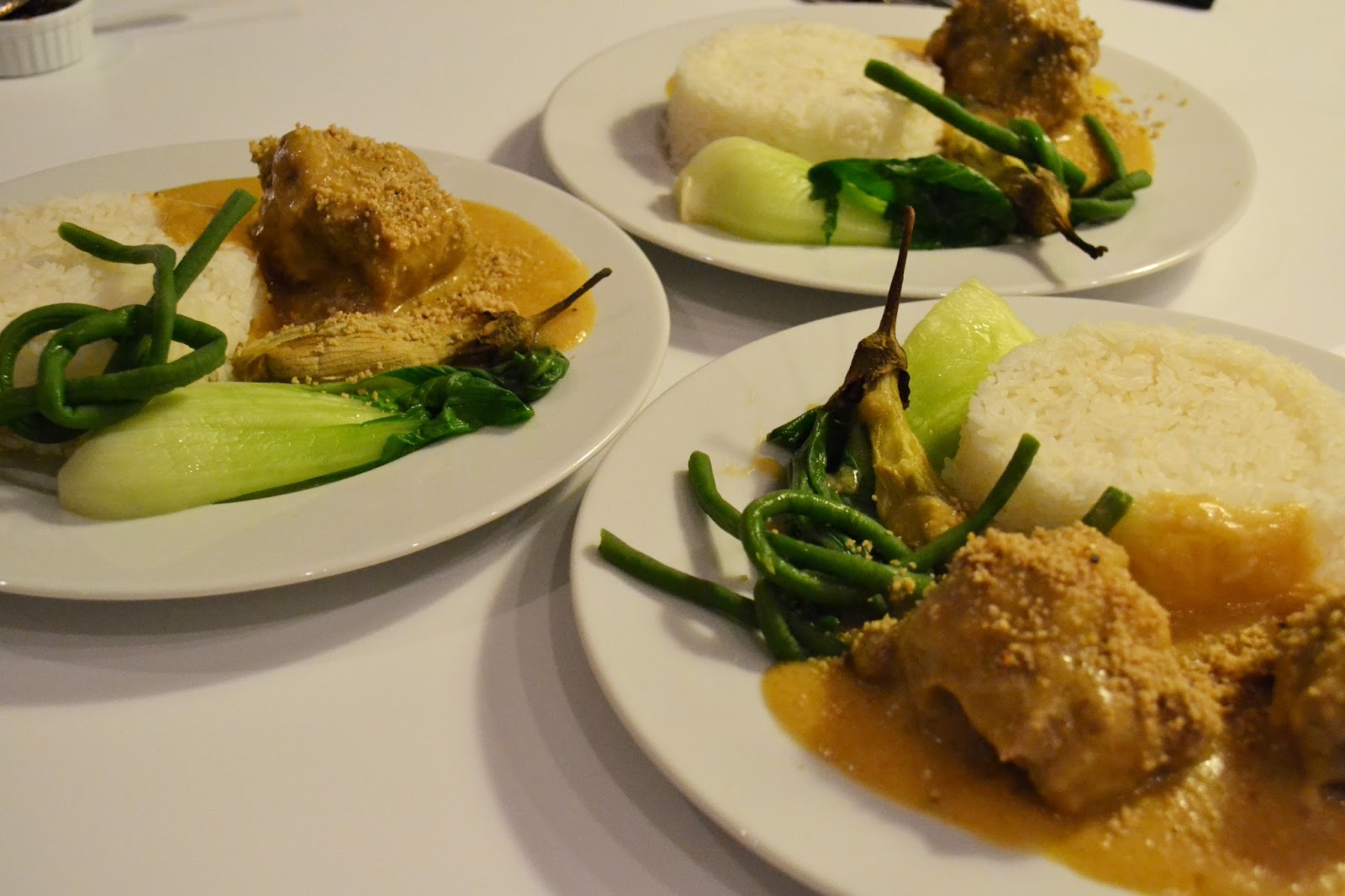

Her most popular dishes are Visayan “Humba”, “Kinilaw”, “Kare-Kare” and “Brazo de Mercedes”. She, too, produces homemade “Ube”, “Durian” and “Barakong Kape” flavored ice cream, bestsellers all in the restaurant.

In setting up the supperclub, Williams not only wanted Londoners to experience the best Filipino food in the city, she was also looking at an opportunity to share customers about Philippine history, culture and her growing up years in the Philippines.

While the Brits have heard about Asian cuisine, they have little knowledge about how good Filipino food is. Williams says. Thank God, times are changing.

“London’s foodie scene is beginning to embrace new cuisines, the trend is growing globally, and over in New York, Filipino cuisine is the latest emerging food trend. So, indeed, this is a great time to showcase Filipino food,” Williams says.

Homesick Pinoys find refuge in Williams’ place. The dishes she serves remind them of home, taking them back to their families and different Philippine regions.

For non-Filipinos or first timers, Williams says she would often hear positive comments. Like they would be surprised to know that Filipino food has depth, in terms of flavor and color. She has also observed that whenever British and European nationals would try Filipino food, they would always know what makes it distinct and then would try more.


Williams relates an interesting episode on her life as a Pinay chef in London:

While preparing for the launch of a Filipino rum brand in autumn of 2014, she noticed a casually dressed guy, wearing a baseball cap backwards, came into the kitchen shouting: “Whose kitchen is this? Whose kitchen is this?”

With a confused look on her face, she answered: “Uhm, the bar, Trailer Happiness.” To which the guy frowned and shouted: “No, who is in the kitchen? Who is here?”

By now she thought she was in trouble and said softly: “Pepe’s Kitchen.” The guy then laughed and shouted: “Yeah, I know, but who is cooking? Who do I speak to, who is the boss?”

By now, she really felt on the spot and told him: “I don’t know the owner of the bar, I haven’t met him!” while her staff was watching, not knowing what to do. The guy then asked: “Who do I speak to about Pepe’s Kitchen? Who is the boss?”


She then laughed, realizing what the guy meant and said: “Me, I am, you can speak to me.” He handed her a business card and introduced himself as the owner of Trailer Happiness Bar.

He said he would like to discuss with her to man the bar’s kitchen on a more regular basis because of her delicious Filipino “pulutans” (finger food). That led to a 3-month chef residency, and the dishes she whipped up every single day became blockbusters on the menu.

By this time, her delectable creations and culinary wizardry would spread by word-of-mouth. No less than the Philippine Embassy in London contracted her to serve food for visiting dignitaries on many occasions.

When “It’s More Fun In the Philippines” ad campaign was launched in the city, the scrumptious food she served stole the show, putting her and Filipino cuisine on the spotlight.

Managing the business

Williams manages everything in “Pepe’s Kitchen” from A to Z. She actually built the website herself, as well as produced the graphics and acted as its photographer.

“I use social media regularly and try to blog as much as I can. When possible, I experiment with Filipino dishes and flavors. In running my events, I manage the stocks and finances, too. I’m also a wife and mother to two little girls. That’s how busy I am,” she says.

Along the way, Williams met many British-Filipinos looking for their own cultural identity and closer connection to home. Among them was Kristian Kabuay, a “baybayin” (pre-Spanish Filipino alphabet) expert, who eventually designed and incorporated “baybayin” graphics into her logo.

Doing well in London’s restaurant scene, “Pepe’s Kitchen” recently partnered with some Filipino brands to cater to high demands for Filipino food, while also putting ample attention to her supperclub baby.
Pioneering Pinay chef

Williams is most proud of the people she had influenced after establishing her restaurants. They have become chefs who are now helping raise the level of awareness for Filipino cuisine in London.

Prior to launching “Pepe’s Kitchen”, Williams was featured on UKTV with John Torode (of UK Masterchef fame), one of the rare times people saw a Filipino cooking on UK tv.

Born in Pasay and lived in Quezon and Batangas provinces until seven, Williams’ attended Immaculate Concepcion School in Baybay, Leyte. She and her younger sister migrated to UK when she reached fourteen, petitioned by her mother who had been working in London for many years.

They lived in Sevenoaks, Kent and only moved to greater London when she attended St. Charles College. She is married to a second generation Filipino, Adrian Williams, a digital media expert who is successful in his own right.

As a self-employed Pinay, Williams manages herself professionally. “When I employ people, I believe in being fair as I have high standards and strong work ethics,” she says.

Upbeat on Pinoy cuisine

Williams considers Filipino cuisine as the next big thing. “Filipinos are on UK tv, they are in every hospital and are successful in most of the things they do. Our presence is definitely being felt in the UK,” Williams proudly exclaims.

For Filipinos who want to be successful in London, her advice: “Be proud of your culture and do not feel inferior to anyone else. There’s more to Filipinos than the stereotypes, all we need to do is just show them,” she says.

Having lived in the UK for many years, Williams have learnt that doing things properly is far more effective than cutting corners. “Quality over quantity is the key to success,” she adds.

Her take on discrimination issue: “London is such a cosmopolitan city that people are really interested in learning new cultures than live in the past.”


She notes that there are more Filipinos in London now. “This includes children of OFWs and their children who look Filipino but are British,” she says.

From roughly 18,000 in 1986, Filipino population in the UK has ballooned to about 250,000 in 2011 and now counts to almost 400,000.

Birmingham, Liverpool, Manchester, Bristol, Leeds and Barrow-in-Furness have significant number of Filipino communities with Greater London home to the largest number of Filipinos.

Hardworking husband

Mae’s husband Adrian works in sales and business development of digital advertising. In 2014, he co-founded a Mobile Tech Startup in London, which has become hugely successful.

According to him, London is the financial centre of EMEA (Europe, the Middle East and Africa). When other industries and companies develop globally, London usually gets involved. In the digital space, London is often the gateway to the US and likewise the gateway for US companies into EMEA, similar to Singapore in Asia.

Both Adrian and Mae are very active as founding members of “Philippine Generations”, a non-profit organization and supplementary school aiming to inspire young Filipinos to bring them culturally closer to the Philippines.
“We are children of migrant workers or OFWs. Many people, especially in the Philippines, forget that their “kababayans” go abroad to work and send money back home,” Adrian says.

“One day, these OFWs will retire and return home, no longer sending money back. They often leave behind children, who grow up as Filipinos in the countries of their birth, often earning 3-4 times what their parents earned, raising their own families and in the process, losing their identity,” Adrian laments.

The two, together with three other second generation Pinoys in the UK, aim to make a difference by educating them to be more aware of the Philippines thousands of miles away. Be it just learning about the culture, visiting the country, experiencing it more, getting involved in social issues or introducing Filipino food to the world like they do best.

Monday, August 31, 2015

PINAY BREADMAKER IN BEVERLY HILLS


by Roger Pe

Bring a good book. Sit outside. Enjoy a flavorful cup of coffee. Bite into real croissant and house-made mango brulee pie. Pretend that you are in some Paris street. Welcome to L’Amande, Beverly Hills.

When Ana Santos and her Portuguese husband Goncalo Moitinho de Almeida were operating Le Coeur de France in Manila a few years back, they would hear comments like ‘they only succeeded because they well understood Filipino lifestyle.’

That lingered on and became a nagging challenge. To be able to show the world that they could be competitive overseas, the two put up another venture, L’Amande, a French bakery and pastry shop in the uptown side of California.

For Ana, it was always something she wanted to validate, that she was skilled high enough to succeed in a world-class location and make a mark for herself.

Having been educated in one of the world’s best culinary schools (Lausanne, Switzerland), Ana learned how to speak and write French fluently (Ecole Mont Olivet), learned business management (Ecole Lemania) and graduated with honors in Hotel and Restaurant Management, majoring in Food and Beverage at the prestigious Glion Institute of Higher Education.

By launching a pet project outside of the Philippines, she thought it would be another feather on her cap. Indeed, she did, it was an overwhelming success.

Why another bakery and a French name? “It is our passion. My husband and I really specialize in bakery operations. The French are also reputed to make some of the best loaves of bread and pastries, hence, our decision to go that way,” Ana says.


Le Coeur de France catered to the Philippine AB market, L’Amande targeted a wider audience in the U.S.

Ana and her husband moved to Los Angeles in 2009, hoping to start a similar concept that had a successful run in Manila.

They've always dreamt of establishing a bakery from scratch and with L'Amande, that dream of serving only the finest French bread and pastry delights, would finally come to reality.

It took them about a year to have everything ready, from logo and store designs to menu items and food costings.

Initially, businessmen found their project interesting but most of them were already bound by exclusivity contracts to Starbucks, Coffee Bean and Tea Leaf, Wholefoods, and the like. They had something good, but could not find the location for it.

When they were about to give up, a friend recommended that they see a landlord looking for exactly what they had. They got the deal in no time and would sign a contract with Rolling Hills Plaza, coincidentally and conveniently located near their home.

Ana immediately contacted her former employees back in the Philippines, the ones who expressed their desire to go with them when they sold Le Coeur de France in 2008. Generous to a fault, Ana had promised that she would not abandon them and include them in her plans.

Ana and Goncalo proceeded working on their investor's visa documents, and in parallel, prepared for the employees' petitions, a backbreaking work due to the amount of requirements needed to bring them in.

She ploughed on nevertheless, despite 9 out of 10 of them did not have college diplomas. She also sent them money for medical, dental and family upkeep, all of them looking forward to a bright tomorrow.


L’Amande opened in Torrance on April 2012, and its success was unexpected. “We would run out of products from 1pm and had lines out the door, all the way to the parking lot. It was really incredible but also overwhelming,” Ana recalls.

Ana had a staff of about 25 people then but soon realized that if the business were to cope with the market, she had to train more people and perhaps, find another place for production.

As a follow through with the strong demand, L’Amande opened another store in Beverly Hills in July 2014 with ten Filipino employees. It had planned to open more stores due to inquiries about franchises and possibly, a commissary similar to what it had in Manila.


Customers loved the place, the vibe, products and innovative spirit the husband and wife nurtured. Quite a number of customers even sent unsolicited notes and letters giving them heartwarming feedback.

Over the span of three years, L’Amande offered weekend specials that were repeated only twice a year. This meant hundreds of new and exciting products customers could enjoy.

On the menu were spiced pear tart (with cinnamon, nutmeg and black pepper), salted caramel napoleon, wild cherry crispy pie (cherries from Italy), apricot cream cheese croissants, blue cheese and pear quiche, and other products that were never seen or tested before.

Management style

The husband and wife team leads by example. “We do not go to the bakery everyday or spend all hours there, but when we are there, we always make sure we work with the team,” Ana says.

Down-to-earth, hardworking and practical, Ana does some baking chores herself. You can see her roll her sleeves to prepare the dough, fold butter into each of them until they become delectable croissants. You can catch her peeling apples for her menu or doing hundreds of things in the kitchen.

“It is something that we really enjoy. We love serving customers, talking about the food we serve, and basically, to ensure that everything is according to the standards we’ve set,” she says.

Asked what is it like managing a business overseas and managing a business in the Philippines, Ana says that aside from the difference in laws concerning compliances, it is very similar. She says, the same degree of professionalism and dedication are required.

Market acceptance for L’Amande has been over and above expectations according to her. People always looked forward to the quality of food they’ve brought to the neighborhood.

Unlike Starbucks, L’Amande is a unique, quaint place with a warm and accommodating feel. It has a European coffee shop ambiance, no laptops, very few meetings, and people stayed as long as they wanted to.

Aside from fresh bread, croissants, tarts, quiches, pies, loaves, scones, L’Amande offered salads, sandwiches and breakfast items.

Ana is most proud when she would see the plates come back empty. “For me, it’s the biggest testimony that the meal was a success. I often tell the team that although we make hundreds of meals a day, a customer, he or she, gets only one. Because of this, each and every plate has to be an expression of what we do best. Every customer has to be delighted. This philosophy has worked wonders for us,” she says.

Manila girl

Ana was born and lived most of her childhood in Manila. She went to school in St. Scholasticas’ College and right after that, left for Switzerland to attend three schools where she met her husband who also graduated from the same course she took.

After graduation, they went their separate ways, Goncalo to Europe to join a consulting group, and Ana to Asia (Bangkok and Manila) to work with different hotels.

They decided to get married in 1988 after a year of trying to find employment in a place where they could be together. They then moved to Sydney and stayed for four years then lived in Singapore when a French company hired Goncalo.


They moved back to Manila in 1994 to start their own Le Coeur de France, operating it until 2008, when they sold to the Pancake House International Group.

Describing herself as strict, disciplined and determined, Ana never required anything from anyone that she herself has not done before. This includes tasks from dishwashing to baking and serving.

“I feel that it is the only way to understand job requirements and the best way to motivate staff. I try to show my staff that I do difficult jobs with pleasure and always with pride. That way, no matter how basic, every team member can feel good about his/her contribution to the enterprise,” she says.

In Manila, the two were very compliant to local Labor laws and even regularized rank-and-file employees when other restaurant operators made cost-cutting measures and employed contractual workers.

Ana would bring lunch to the office many times. She and Goncalo would often host dinners and lunches for employees, welcoming them in their home like their extended family. When an employee’s mother was confined nine years ago, Goncalo lined up at the hospital to donate blood.


What would she advise Filipinos who want to set up a similar business in the US?

“I would tell anyone to study the laws well before diving into a business. It would also invaluable to set a reasonable budget to hire the right professionals from the beginning, to make sure that the business is on solid ground. I would also encourage people to study the market extensively, not to take things for granted and if possible to test it before investing huge amounts,” she says.

Not everything is rosy for Ana and Goncalo though. Like in any successful business, they too, had to contend with the ugly side. Embroiled in a labor dispute with the very people they’ve helped and treated like members of their own family, it is disheartening to know that they want to bring them down.


Has crab mentality creeped in? Obviously. Disgruntled people want to discredit them and have even resorted to fabricating stories, manipulating truths and spawned other tales from the crypt.

But just this week, the couple received a favorable judgement from the courts - the judge/magistrate issued an order denying plaintiffs' motion for a right to attach their home despite their very aggressive efforts.

The court has also found that each of the 11 plaintiffs made "no reference to any documentary evidence corroborating their generalized estimates of their hours worked". Furthermore, the "defendants have offered rebuttal evidence".

With the couple’s entrepreneurial and undying spirit, they can weather the storm and  bake another success, one that is just as wonderful as their bread and pastry masterpieces.

Saturday, August 8, 2015

PINOY REVELS IN DESIGN 'WONDERLAND'


by Roger Pe
Philippine Daily Inquirer
August 9, 2015 issue

A look at “The Grand Budapest Hotel” “Chicago”, “Macbeth” “Phantom of the Opera”, “Breakfast at Tiffany’s”, “Pan” “Lord of the Rings” “Brooklyn”, “Titanic” and many other great Hollywood movies and Broadway plays would tell you three things. They all have good stories to tell, extraordinary production craftsmanship, and stellar costumes worn by actors and actresses.

Costume designers Edith Head, Eiko Ishioka, Sandy Powell, among others, not only helped film directors make box office hits, they also won Oscars for their talent. No wonder a Pinoy would want to go the distance and follow their footsteps.

Raven Ong, a graduate of production design from College of St. Benilde School of Design Arts, and currently finishing a master’s degree in Design at the University of Connecticut has just a wrapped up two plays in America, one directed by 5-time Emmy Award winner Francesca James (“Lend Me A Tenor”) and the other, by playwright Steve Martin (“The Underpants”).

When he was chosen to represent the Philippines in the biggest and most important theatre design festival in the world, Ong felt honored and ecstatic, relishing the thought of showing what a Pinoy can do on world stage. Though it thrilled him no end, it was not easy, however. He had to do a lot of preparation and hard work to finally come up with something worth showing to the world.


In the 13th edition of Prague Quadrennial (Tribes Event) held last June 17, Ong, together with Heather Lesieur of USA, Jelena Antanasijevic of Serbia, Tuoxi Wu of China and Pat Ubaldi of Italy presented a new design form: a patchwork of their own country’s culture.
In their presentation, not one country overshadowed the other. Each country’s design was woven together to form a new ‘tribe’ with a unifying purpose rising to life.

“Although we were a tribe, our characteristics and costumes retained the silhouette of our nations. They were constructed on the same fabric to interconnect to each other,” Ong says in an overseas interview.

In dance, Ong and his group’s movements also harmonized to reach full synchronicity. All of them stepped as one unit in a style that was made of individual movements introduced at the beginning of the performance.

Ong’s presentation, “Country of Many Nations”, was composed of international group of students, chosen to continue costume design studies at UC.

In Prague’s main show, “Section of Countries and Regions”, he also showcased his work along with other Filipinos who were also from Benilde: Gabby Fernandez, Jay Aranda and Magda De Leon.
A tradition that began in 1967, the Prague Quadrennial featured live performances of artists from a record 78 countries, offering tens of thousands of visitors an astounding labyrinth of scenographic work from all over the world.

The entire festival took place in Czech Republic’s historic capital city where interactive programs allowed visitors to participate in workshops, lectures and discussions. Leading personalities in contemporary theatre, performance design and even film, added prestige to the world-renowned event.

Early years

Ong was born in Manila and grew up in Divisoria. His parents had always been into vegetable trading, often commuting to Baguio and back to Manila. He remembers spending many summer vacations with his brother in Baguio because of their family business.
A half Chinese, Ong went to Saint Jude Catholic School where we learned to speak, read and write Mandarin. At Benilde’s School of Design and Arts, an academic complex built like a big gallery, Ong developed his skills, designing sets, costumes and props for movies, commercials, television, theater, events and advertising.

As a little boy, he loved the performing arts so much that he lived inside them. He would always join school programs and singing groups. As his thespic talent developed, he also dabbled in drawing, joined poster design contests and made costumes for class projects.
Ong refused to design only on paper. He wanted something carefully thought about. Something he envisioned and created in mind, translated and crafted into a sketch, and finally, rendered and molded into something tangible - one that is worn and something that served a purpose, be on a theater stage or something that comes right after.
As someone who loved the arts, Ong naturally gravitated to a college design course, first at UST and then at College of St. Benilde. The latter he says, gave him a sense of fulfillment that he could never find elsewhere.

“Benilde introduced me to designing. I had inspiring professors who had so much passion that I immediately fell in love with it, from theatre to costume and set designs, to mounting a production. I simply embraced it,” he proudly says.

In his years at Benilde, Ong never wasted time. He made the most out of his classes and always gave it his best shot. Trailblazing designers who have made a difference in design excited him, one of the reasons why his production designs had global perspective.

He has always been thrilled by the craftsmanship of Colleen Atwood, Sandy Powell and the late Eiko Ishioka on film. He admired William Ivey Long, Julie Taymor and Robert Jones for their theatre design work. His topmost favorite is Gregg Barnes whom he met in New York during an awards night.
“I love his design process, his costumes on Broadway always blew my mind, plus the fact that he is such a cool and down to earth guy,” he says.

The opportunity to study abroad fell on Ong’s lap as early as four years ago. Because of a previous commitment, he couldn’t just pack up and go. He was doing costumes for Philippine stage stalwarts Joy Virata, Menchu Launchengco-Yulo, Jaime del Mundo, Ana Abad Santos and other noted theatre artists.
“A war was going inside me then. I could not just disappear and renege on my commitment. I felt it was not yet the right time to go. In my mind, I kept saying: “If it’s for me, it will happen. If it’s for me, the offer will come back.”
The following year, 2012, UC’s costume design department head Laura Crow wrote him asking if he was still interested. Ong froze. The opportunity came back, and he told himself: “This was really meant for me!”

Ong consulted many of his friends, among them his designer mentor, Eric Pineda. After patiently waiting for another year (somebody was next in line for the same position) and all of his friends said “yes”, he left the Philippines in 2014 for a new beginning.

In one his classes, Ong met Broadway costume designer Ann Houldward and listened to her inspiring thoughts about being a costume designer. “She told us: Design is a gift, give it only to people who are willing to receive it, be gracious because theatre is about life,” he relates.
He remembers Fabio Tobilini talk about hardwork and designing costumes for Hartford Stage, where his idol, Tony award winner Darko Tresnjak, works as its artistic director.

Design philosophy

A good design for Ong is something produced out of a great collaboration. “What’s amazing about designing for theatre is the process that one has to go through, where the process takes you and what comes out of it,” he points out.

Ong always wanted versatility in his work. As the job requires a variety of themes, he believes that one must savor the emotional creative journey with each production he is tasked to do. “Nothing is stagnant here. Your mind just keeps on being creative and productive,” he explains.
As a production designer, he lives by his mantra: be always trustworthy and dependable. “A director can never have a scenic designer, a costume designer, a lighting designer or a choreographer that he or she does not trust. Designing for the theatre is all about trust,” he says.
“We are the backbone of the director. We translate words into visuals. We have this huge responsibility not only to provide the needs of the production but also to make sure that we attain our vision in terms of storytelling,” he stresses.
Right now, Ong feels being in “Wonderland” because his mind and eyes have been opened to a lot bigger things.

As a full time graduate student taking up design classes for plays, musicals, dance, fantasy and opera, poetic realism and post-modernism, he is also taking technical classes in millinery, tailoring, draping, make up, wig and hairstyling.
These include scenic design, lighting and concept development, working an average of 13 hours in the costume shop every week, building costumes and constructing all that is needed for the university’s season shows.

His routine also includes going to New York for fabric shopping, watching Broadway and off Broadway shows. As his department has a connection with Metropolitan Opera, he gets to watch operas as well for free.

His words of wisdom for future design students: “You can’t be a designer just because you want to. You become a designer because you love it. Theatre is all about learning, and that is the best part of it.”

Saturday, July 11, 2015

BRINGING SUNSHINE TO FLORIDA


by Roger Pe
Philippine Daily Inquirer
July 12, 2015 issue

Working abroad was never part of Rowena Chio-Uy’s plan. She was happily married and living comfortably in the Philippines. Undecided on what to do after finishing college in Cebu, she went to the United States paid for by her parents. The vacation would change her life and make her eventually live in a foreign country.

Upon arriving in America, Uy would learn from her cousin and classmates that Occupational Therapy graduates were very much in demand in Florida. Being a retiree’s paradise, she was told that the state was perfect for those who have license to practice.

When she returned to the Philippines, she decided to enrol in an OT course. Her burning reason: it was time to think about the future, for his son who was only one-year old then (now a budding junior football player) and her forthcoming children.

A little background on what Occupational Therapy is: It is helping people overcome the effects of aging, physical or psychological disability. In the U.S., the profession allows big career opportunities to practitioners.

OT requires a tremendous amount of patience, compassion and determination. “It is a tough job because you have to lead people to live their life back and give them a new sense of purpose. But it is easy for those with a natural interest in caring for people,” Uy says.

Occupational Therapists work in hospitals and various health care settings or they visit patients in their homes. They design individual and group programs to enhance clients’ independence in everyday activities, like helping them recover their motor skills and make them learn do the same things again (dress by themselves, cook, use a computer, write, and do many different activities) with one goal - rebuild their confidence, as well as their self esteem in social situations.

When she has mustered enough courage, Uy talked to her parents and husband about her plan. She told them she wanted to know what America could offer to her family. “I wanted to give it a try. If we don’t like it, we can always go home anytime,” she recalls telling them with determination.

And so, all of them agreed and gave her all-out support. She attended review classes in Manila and took four tough exams consecutively. The process was long, tiring and expensive. It took her one full year to finish her course.

Uy’s leap of faith transported her to her American dream. Fast forward today, she works as a full time licensed Occupational Therapist in a Skilled Nursing Facility. She also has a second job, doing Home Health work to earn extra income, the latter, one of Florida’s highest paying jobs.

Last April, she was chosen as “Employee of the Month” at the facility she works with, given a bonus, a free lunch to celebrate the occasion and special parking privileges for one whole month. They may seem small but it meant the world for her – she was making a difference in the lives of her patients.

Working in a geriatric home is emotionally rewarding for Uy. “Most elderly people I deal with are alone, lonely and depressed. They have children who have left them, who are now busy with their own lives, families and career or living far away in another state,” she says. But it is a pleasure for Uy because she considers them already part of her family. A people-pleaser that she is, she feels very much accomplished knowing that she is able to put a smile on their faces and makes them happy.

Daily challenges

Uy seems perfect for her job. Always wearing a smile she tries to be optimistic as much as possible, constantly demonstrating a positive attitude whoever she meets. “I always want a happy environment. I am a sensitive person and can be moved easily. It’s very difficult for me to say “no” to anything,” she says.

She even has a positive attitude about discrimination. For her, it is an experience people can learn many lessons from no matter how serious. She always tries to be nice and helpful to everybody no matter what the situation is.
“There are, however, people who take advantage of other people’s kindness,” she says. “They interpret it as a sign of weakness. They would try intimidation by making you feel they are more superior. Being humble, sadly, doesn’t work all the time. Sometimes, you have to let them see your strong side, to prove that you worked hard to get where you are right now,” she says.

Uy takes pride in other Filipinos she works with in the facility. “We help each other out, even if we work in different departments,” she says. Global Pinoy asks who the real Uy is, here’s what she says: “That is difficult to answer. I would rather people who have worked with me answer that.” Here’s reprinting what they say about Uy:

Co-worker (Sandie): “I find you to be uplifting, intelligent, and strong. You derive your strength from your faith, family and friends. In your work, you help you patients find their strength as they are recovering from their illness or injuries. You have a calming presence and a special talent for making people smile even though facing tough time.”
A Resident Patient (Angie): “You are very patient and very helpful. You go above and beyond with residents.”

From a Boss: “You are an asset to the therapy team. You are flexible and adapt to changing situations throughout the workday while maintaining a positive attitude. You make patient care a top priority.”

Living in America

Being planted into the American culture is not exactly big deal for Uy. “We are used to this kind of life. If there’s one word to describe it, it would be “routine” - from work, to bringing the kids to school, getting them into sports, to just about anything,” she says.

Holidays and weekends mean “household chores” for Uy, it is not about rest. She has no “yaya” and thinks she doesn’t have enough time for herself. “Filipinos should value having household help. With them, you can focus on your work, do other important things and spend more quality time with the kids.”

Working in America gives Uy space to become more independent and provides her privileges to grow her profession. “I think I want to work here while I’m young and there are opportunities. My long term goal is to go back to my home country to retire,” she relates.
Uy was born in Quezon City but grew up in Cotabato City. She and her husband Peter studied in a Chinese school from kindergarten to high school. Her family moved from Cotabato to Davao when peace and order in the city were getting worse and making them unnecessarily anxious. “We cannot live a normal life in Cotabato. Hearing gunshots even in the city was normal and our friends and relatives were being kidnapped,” she relates a sad story.
Her parents strived to give her and her two other siblings a good life. “We grew up seeing their struggles and eventual successes, strengthening our faith,” she relates. Prior to her work in the U.S., Uy took the Philippine Board (though not a pre-requisite to work in US) exam, TOEFL (Test of English as a Foreign Language-written), TSE (Test of Spoken English) and the state board-NBCOT (National Board for Certification in OT).

She took internships in various hospitals, clinics and a number of schools. She trained in Philippine General Hospital, volunteered in a charity organization and worked in Mind Works Therapy and home health clinics to toughen up her work experience.
Her support system in the U.S. comes from her family, relatives, former college classmates and Pinoy friends of people related to her. Like every Filipino, she misses Filipino food, having laughter with friends and get-together with relatives. “I miss Holy Week, observance of All-Saints Day and Christmas celebration in my homeland. Indeed, it’s more fun in the Philippines,” she says.

Every time patients would ask her about her nationality, Uy would always proudly answer with a warm smile: “I am Filipino.”

What would she advise Filipinos who’d want to do the same work in the U.S.? She mentions her philosophy in life: “Always be teachable and humble. Never stop searching for knowledge because there is always something new to learn. Always add sincerity to what you are doing. Being dedicated in helping your patients will make a difference.”

Uy is proud to be an Occupational Therapist. For her, it is a fulfilling career because of the way it helps many people overcome difficulties at certain point of their lives. She says, just as America needs OTs, the Philippines also needs them, specifically, pediatric OT for special children.

Awareness for OTs among Filipinos has been increasing steadily. According to a migration of health workers country case study made by the U.P. Institute for Health Policy and Development, the U.S. is a preferred destination country for all categories of health workers because of the following: Better working conditions, professional development opportunities, advanced technology, facilities and equipment and high opportunity for family migration and citizenship.

Saturday, June 13, 2015

TOUGH GIRL IN THE BIG APPLE


by Roger Pe
June 14, 2015 issue
Philippine Daily Inquirer

Sport has taken Sheena Atilano to places she has never imagined and today, faces the greatest challenge of her independent life. Can she survive New York?

She has been in the city that never sleeps for over a year now and looks ready to conquer it, like the way she conquered her fears when she faced her first hurdle in track and field.

Before she became a star in Philippine Athletics, Atilano was a winnow and sports officials never took her seriously. She had to constantly prove herself and worked doubly hard. After participating in local meets and achieved a measure of success, fame did not automatically come easy. She lurked in the shadow of Elma Muros-Posadas, former queen of Philippine hurdling.

For many years, she played second fiddle to Posadas - until a prestigious Asia-wide competition catapulted her to fame. In the 2007 Asian Athletics Grand Prix (patterned after the International Amateur Athletics Federation Diamond League) held in Pune, India, only Asia’s elite athletes were invited to participate. Officials of the national contingent did not expect her to figure prominently in the 100-meter hurdles but she surprised everyone, including herself.

She chased two highly rated and long-striding Kazakhstan athletes right at the gunstart, stuck with them to the finish and registered a personal best at the finish line. Her gritty effort gave her a podium finish much to the astonishment of punters back home. The icing on the cake: she broke Posadas’ 16-year old national record with a time of 13.65 seconds. That still stands today and probably will remain for another fifteen years.

Posadas’ record was not supposed to be broken, more so by someone who has never medalled in any SEA Games. But it was meant to be. Atilano who was always on the injury list on three consecutive SEA Games (2005, 2007, 2009) struck back and made an emphatic redemption.

Was it a fluke? No. She stretched her medal-winning streak to three in the same Grand Prix circuit. Her status as one of Asia’s fastest rising stars was thus sealed.

On breaking Posadas’ record, Atilano says: “I just thought that in order for me to break her record, I have to be muscular like she was. When I clocked 13.7 seconds in one of PATAFA (Philippine Amateur Track and Field Association) track meets, I realized that breaking her record was possible.

That motivated her and she went into deep training, going even as far as the U.S. After participating in several competitions abroad, her time drastically improved and she consistently went under 14 seconds.

Like many Filipino athletes with inspiring stories, Atilano’s is worth telling. She was born in La Carlota City, Negros Occidental where she spent her elementary and high school years, graduated in University of St. La Salle Bacolod with a commerce degree and majored in management info system. In between her school days up to finishing her masters at DLSU Manila, Athletics became her religion.

Her parents were both educators. She is the youngest of three children and has a brother who is a professor at UP Los Banos. She got involved in Athletics because her P.E. teachers pushed her to join a running meet thinking she had springs on her feet.
“I was hesitant to be a hurdler. I have always thought that I was a jumper and was never really cut out for it,” Atilano says.

She remembered being very nervous and cried a river the night before because she could not back out of competition. She would eventually vanquish her fears and got used to an event many girls feared.

Backbreaking training

“When you love what you are doing, nothing is difficult. What is harder is getting on the coaches’ list. You need to constantly let them know that you have what it takes to get much needed support,” Atilano ruefully says.

In the Philippines, sad to say, support is not given to promising athletes. They must crawl their way in and prove something before they are able to get ample help from governing national associations.

Lucky for Atilano, a company came her way and she was given an opportunity to work while training. Two coaches, Jeoffrey Chua and Jerry Cablayan were also always there for her for much needed guidance.

Atilano’s training would begin before daybreak that would last for three hours. She would hie off to work at 10 am and finish at seven in the evening, 6 days a week. She made a lot of sacrifices that her world turned upside down. It came to a point where she would need to choose between working and training. She chose the latter.

Hurdling accidents and injuries have plagued Atilano’s training days, some of them took months to recover. “The toughest part was not knowing when you’ll be back,” she says. Her woes must have a connection to why you can count by your fingers the number of Filipina hurdlers today and none has broken the 13-seconds barrier up to now.

Training was not totally tough for Atilano though. She considered it as “mahirap na masarap” because of the personal sense of fulfillment it gave her.

Before New York, Atilano participated in Palarong Pambansa where she ruled like no other for four years. Her reign would bring her to the Philippine National Games, UAAP, represent the country in SEA Games (Manila, Vietnam and Indonesia), Asian Athletics Grand Prix in India, Hongkong Germany and to USA Track and Field sanctioned meets in Southern California.
Her training philosophy for all these: “Nothing could replace hard work.”

As an athlete, Atilano was very disciplined, applying it to her diet, sleeping habits and going out with friends. She gave up some of her hobbies and gave her training an unblinking focus. She admits having high tolerance for pain, not missing on her training workouts even when nursing an injury.

She describes herself as an adventurous person. “I have always wanted to experience and learn new things. I hate drama. I could be emotional but I don't want to show that side of me. I always get the first impression of being a "maldita" but that's not true in real life,” she confides.

She notes some great things that are happening in the country’s athletic scene today. Like, more promising athletes are being sent abroad and sponsors are honestly helping. Athletics has always been one of the biggest gold medal contributors to the country’s campaign in SEA Games. “May it continue to produce better athletes and develop the country’s grassroot program even more,” she hopes.

She admires Olympic champion Gail Devers, both 100-meter sprint and 100-meter hurdles gold winner in 1992 and 1996. “I have always thought of hitting two birds in one stone because of her, unfortunately I was not as talented as she was,” she humbly says. Come to think of it, she actually did. She finished her studies and achieved a national record at the same time.

While studying at DLSU, Atilano, had all admiration for most of her teammates. “Some of them came from rich families but their determination was something else. They could afford to pay tuition fees and need not wake up early in the morning but went through it all,” she narrates.

Life in New York

Atilano came to the Big Apple not for the status but for the money and opportunities. “Life is not easy wherever you are. You may be in the best city in the world but you still have to work hard,” she says.

She came upon the invitation of a former national track athlete who was very accommodating and generous to her. After two years, she would decide to stay for good. She is now on her own enjoying her work at a pharmaceutical company.
Atilano still follow her training regimen. She misses her athlete life and still wakes up at 5:30am to go to the gym before going to work. Her sexy abs are still visible, a 6-pack body to die for many are envious of. “I am happy and very thankful with my New York life, a world totally new for me,” she says.

What would she advise young Filipino athletes who would want to become Lydia de Vega, Elma Muros or like her? “I would say to them not to hold back if they see any potential in themselves to excel," she says. "Utilize your talent as early as possible. An athletic career is just too short,” she adds.

Atilano says it was too late for her to realize that she could have achieved much more had she started training seriously. Had she did and injuries not stalled her she could have represented the country in tougher, bigger arenas.

One thing she wishes she could have done: “To represent my country in the Olympics and show the Filipino flag to the world.” That could still happen. It could not be in a track oval but in many life’s events she is now fearlessly facing.

Wednesday, May 27, 2015

FILIPINO SPIRIT IS WORTH SERVING WORLD FOR

by Roger Pe
Philippine Daily Inquirer
May 24, 2015 issue

You cannot catch up with this man. Either he is always travelling the world to promote a Filipino pride to world- class status or he is in his farm to personally oversee the crafting of his ‘baby’, bottle by bottle.

Tony Manguiat is a corporate lawyer but the other side of him wants to see the Philippine “Lambanog” (coconut drink) elevated among the ranks of vodka, tequila, brandy, cognac, rum, among others, as one of the world’s most desirable drinks.

Humble enough to call himself a farmer and a “probinsyano”, Manguiat abhors the Edsa traffic and oftentimes escapes to his farm. In his beautiful Lipa hideaway, Manguiat is a different person altogether, a craft distiller of “Lambanog” and has upgraded it into haute liquor.

Manguiat wants to see a Filipino brand shine like a warrior beyond Philippine shores and accepted by global wine connoiseurs. He yearns to see a bigger market for local coconut farmers. Young, focused and unstoppable, he seems to have taken the cudgels for the dying coconut industry and is getting a headway.

At the 53rd World Selection of Spirits and Liqueurs by the prestigious Monde Selection International Institute, his extra-premium Philippine “Lambanog”, Lakan (named after a pre-Spanish title of nobility), stood out and was conferred with a Gold Award.
Why not? It is unique to the Philippines, made from fresh young coconut flower nectar and handcrafted by master artisans.

To create this pure, clean and natural liquor, it takes tens of coconut trees and meticulous multi-stage distillation process to make one bottle. Practically, all human senses are used to create this exceptional product at every level, produced in limited quantities of peerless, exquisite quality.

“Lakan’s victory is victory for the local coconut industry,” Manguiat says. He is set to travel to Lisbon to personally receive the award.

Lakan was tested and approved by a totally independent professional jury of more than 80 professionals: Michelin-starred chefs, members of the French Culinary Academy, brewing engineers, university lecturers, nutrition and health consultants, chemical engineers, famous oenologists and master sommeliers.

A brief background on “Lambanog” and the coconut industry:

The Philippines is the world’s second largest coconut producer, ranking behind Indonesia, as of the latest statistics by the United Nation’s Food and Agriculture Organization. Of the country’s approximately 12 million hectares of farmland, 3.56 million hectares are planted to coconut trees. Throughout the country, coconut is consumed and utilized in variety of ways.

An export-oriented sector, the coconut industry is under threat today. Though it contributes an annual average of 5.97% to the country’s gross value added (GVA) and 1.14% to gross domestic product (GDP), the country’s coconut regions that host it have the largest number of rural poor. Around 60% of farmers in these areas live below the poverty line.

From coconut comes the well-known “Lambanog”, created during pre-colonial times and mostly produced in Quezon province. It is neither wine nor gin, nor vodka but in a class of its own, handed down through generations of coconut plantation farmers.

The process includes collecting the sap from the coconut flower, like to rubber tree tapping. The sap is then fermented to turn into “Tuba.” It is then distilled to make “Lambanog”.
Global mindset

Four years ago, Manguiat was introduced to Lawrence Lim, a farmer considered by many as “Lambanog King” of Lipa and a walking coconut encyclopedia. The latter was so good at it that just by sniffing, he can tell a good “Lambanog” from a bad one.

Manguiat and Lim preferred the countryside than the hustle and bustle of the city. They would rather sip coffee and work at the farm, becoming the best of friends. “Lawrence is 67 years old and I am 47. He is an environmentalist and I am in charge of making sure that the “Lambanog” that we are introducing to the industry is done properly, mindful that we are doing it for the Filipino,” Manguiat says.

He values Lim’s advice who tirelessly reminds him that, “we are farmers first before we are businessmen.” Which means, he has to first take care of their agricultural resource in order to grow their business.

Farmers-at-heart, the two would often meet and discuss coconut farming that would last for hours. Their chats about the “Tree of Life” would result in producing the best “Lambanog” in the Philippines.

“We believed that “Lambanog” can yield the true Filipino spirit, steadfast and unyielding, one that is distinctly Filipino, a product and tradition that you will never find elsewhere in the world,” Manguiat says.

Manguiat and Lim eventually fell in love with “Lambanog” making and their passion is making local coconut nectar gatherers happy. From the early morning "tree crawl" of the “mangangarits” (nectar collectors) to harvesting coconut nectar from trees that run up to 30 feet high, he and Lim would exchange pleasantries like children, narrating to their amusement the prospect of making “Lambanog” famous the world over.
Modernizing “Lambanog”

The Lakan distillery is nestled in a rustic farm where liters of coconut nectar are collected fresh on a regular basis.
Here, Lambanog’s purity is never compromised nor adulterated, it is meant to be romanced, distilled lovingly, and unhurriedly, not mass-produced like what industrial distillers do. Most importantly, it strictly follows the most hygienic standards set by the Food and Drugs Administration.

Manguiat has even commissioned a French craftsman to make a simple but sophisticated bottle design. To capture the Filipino “warrior” and “nobility” spirit, he engaged modern Filipino packaging designers to give it local color but with a world-class look.

The bottle looks like a work of art, made of sparklingly white crystal and weighs almost one kilo. The premium black packaging pictures a pre-Spanish Filipino royalty – the Lakan. Put side by side with the best in the world, it either levels up or stands out from the rest.

Thinking of giving your friends abroad with something they will never ever find anywhere else in the world? Lakan is the perfect gift and is available in Duty-Free shops.

Manguiat is tickled no end with the idea of the world finally tasting the famous Philippine drink that has character, sweet pungent scent, smooth and long finish.
“Most Filipinos know “Lambanog” but very few realize its huge potential. That is what we want to share with them, including the endless possibilities of the coconut tree,” he says with so much intensity.
His vision is to make the Philippine “Lambanog” acknowledged by the world as a spirit category. He says the Philippines’ Lakan will be its answer to Japan’s Sake, Korea’s Soju, Mexico’s Tequila and Brazil’s Cachaca.

No one believed Manguiat when he first introduced Lakan to his friends. His drinking colleagues who’ve already disowned “Lambanog” could not be even convinced. One said: "I won’t ever go near a “Lambanog” again for the three days of hangover it gave me!”

The guy would eat his words. After enjoying Lakan, he would call Manguiat at 7 in the morning the next day saying: "You have to tell me: Why was there no hangover? And how the hell did I get home?" He replied: “There wasn’t any because you enjoyed one of the best drinks in the world and you were having the time of your life that we had to call your wife to bring you home."

During Lakan’s early development stage (when the bottle still had no label information nor government stamp), Manguiat had asked a French liquor expert to try it. After his fill, the guy asked Manguiat for its alcohol proof content. When he told him “90”, the guy asked his assistant to validate it.

Mr. Expert was astounded by the same result: 90 proof. He then jokingly asked Manguiat for Lakan’s formulation secret and seriously offered him to do a business venture.

For a guy who broke all rules in marketing (he had no market study whatsoever except intense belief in his product), Manguiat is a revolutionary brand warrior. When Lakan had its soft launch, guests couldn’t hide their excitement over the Philippine “Lambanog”, the drink that is on the cusp of being introduced to the world and served globally. “We are proud of the “Filipino Spirit” embodied in Lakan, resilient, strong and sturdy like the coconut tree,” Manguiat says.

Friday, May 22, 2015

COUNTING MARKETING SUCCESSES AND STILL COUNTING

by Roger Pe
Philippine Daily Inquirer
May 23, 2015 issue
As they say, good things come to those who wait. But certainly, greater rewards come to people who improve themselves further while waiting.

You cannot argue with success, especially if they come in threes or by a hundredfold, and this may simply apply to the career life of a determined girl, who right after college already knew what she wanted.

Kathlene Gomez graduated cum laude from the University of the Philippines with a degree in Business Economics. As soon as she stepped out of the Diliman campus, her exposure to economics, finance and marketing disciplines was formidable enough to face the corporate world.

As a management trainee exclusively chosen by one of the country’s biggest telecom companies from among the brightest of her batch, Gomez was immediately promoted as head of Customer Analytics and Strategy Unit of the company’s Customer Engagement Group only after two years.

Credit that to her perseverance and focused attitude, amply enriched by her knowledge on corporate, brand, trade marketing, market research and analytics.

While market research was very challenging for her, she wanted more. The truth of the matter was, she yearned to do actual program implementation and set her eyes on the exciting world of marketing.

What made her move? “The complexities of promoting different types of products, the challenge to one’s creativity and strategic thinking,” Gomez says matter-of-factly.

Gomez evolved from assistant brand manager to marketing director of one of the country’s most innovative poultry product companies, Bounty Agro-Ventures Incorporated (BAVI).

“The creative, analytical and strategic thinking processes that go with every consumer campaign, doing a commercial, whether a billboard design, or a piece of communication is what I like about marketing. For me, it is an ever-evolving field and I can therefore see myself dedicating my career to it,” she declares.

When she first joined Bounty Agro Ventures, Gomez’ first major challenge was to face the difficulty of promoting a “commodity product.”
In the Philippines, poultry companies are one of the lowest advertising spenders because they carry products that people will buy no matter what. However, the emergence of new and a growing number of competitors in the market has forced poultry companies to think of ways on how to protect their market share.

Gomez’ creativity as a marketer was put to test: she has to protect her brands’ positioning and image across a country that is geographically difficult to manage with limited resources and budget, which was exactly what she loved about marketing. She further tells us her story:

“Becoming the youngest marketing group manager at age 26 in a male-dominated poultry industry did not come easy. I sat through management meetings filled with men many years my senior. Focused on my age and stiletto heels, they would send me those prying looks of doubt when I entered the room, investigating whether I had sufficient knowledge of marketing and the poultry business. I did not let age and gender box me in. Growing up, I got used to overcoming the difficult and using the difficult to prove the impossible.”

On her first year in BAVI, Gomez launched an economy brand of dressed chicken in 940 stores across the country. Everyone thought that her idea was not going to work because for years they had been marketing a premium brand. She, however, dared to challenge a set-up that was long regarded as effective.
When she was promoted to Marketing Head, the hallmark of her leadership was the formation of a strong team. She worked on teaching them how to have clear goals. She conducted performance evaluations and coaching, redefined their roles and empowered them to handle significant projects. In a year’s time, the group successfully launched 52 campaigns, organized 55 events and achieved a 100% report compliance rate.

“These instances demonstrate the constant challenge I face in my work—to go against the grain, to make things happen. My refusal to be lulled into a comfort zone of unchallenged assumptions and traditional approaches not only produced immense revenue but most importantly, served as a source of inspiration for our people, who for me are our company’s best assets,” Gomez proudly says.

After just a year as a Marketing Group Manager, Gomez was able to improve the Top of Mind Brand Awareness of the company’s fresh chicken brand from 11% to 46% and Brand Usage from 6% to 39%.

Likewise, she pioneered the first-ever online ordering website in the chicken rotisserie industry which resulted to a 49% increase in total delivery sales volume in less than two months after launch.

Gomez was also able to successfully launch three new brands in more than 900 retail stores throughout the country. Counting her marketing blitzkriegs were the aggressive marketing campaigns on social and digital media, making BAVI brands the most liked brands in their categories on Facebook.

In August 2011, Gomez received the Best Real-Life Marketing Plan Award during the 28th Strategic Marketing Course - a 6-weekend short course for young professionals conducted by the University of the Philippines.

In 2012, Gomez was chosen to be part of Rotary International’s Group Study Exchange Program in Florida, USA—a program for outstanding professionals geared at expanding knowledge of their professions and their industries in an international setup.
Moreover, she joined more than 20 marketing and advertising conferences and seminars the past years to help her gain deeper knowledge of her field.

She considers the following as her mentors and models for excellence and leadership: Ronald Mascariñas, President of Bounty Agro Ventures, Inc., Joven Dy, former Senior Vice President of BAVI and Tara and Dondi Alentajan, her former bosses in Globe Telecom and BAVI, respectively.

Her management style

Is there a Gomez touch that she wants to instill to her underlings?

“As the head of a department, I let my team members take ownership of projects and give them enough leeway to grow, learn and make mistakes. I see to it that my team members enjoy the recognition they deserve for a job well done or learn from mistakes made and move forward. Although I give my team members enough freedom to do things their own way, I still make sure that I proactively get involved in any situation that might compromise the team’s overall work productivity,” she proudly shares.

Gomez always encourages a healthy exchange of ideas among her team members. Always appreciative and welcoming of new ideas that can also challenge other’s ideas, she encourages a productive exchange and deeper understanding of ideas among her team members.

How does she manage and inspire people to become productive?

Gomez tries to ensure a healthy and upbeat working environment and relationship in her team. She always recognizes a good performance, giving away constructive and positive feedback that develops competence and high morale of the team.

“I make sure that I make it clear to them what the objective of each project is and what the results of their work can contribute to the total business and the company. Knowing how vital their roles and contributions are, makes my team members work harder and feel motivated to achieve the desired output of each project,” she says. “I believe that the only brand of leadership that can truly make a lasting difference is continuing to inspire and challenge people,” Gomez says.
Her family

Gomez’ family did not have a lot when she was growing up. She taught herself that for every opportunity that life would present to her, she would not just do good at it, she had to overcome and excel.

“I was going take my seat at the high table. I thrive in the firm belief that anyone can be a leader and achieve anything in life through hard work, determination, and sincerity,” she says. Her family has served as her number one inspiration and has constantly pushed her to never stop chasing her dreams.

Someone once told her: “Never do what is easy, but do what is right; because the right path is usually never the easy path.” This has always been her guiding principle in life. “A great leader is not afraid to take risks, is averse to mediocrity, works harder when challenged, and constantly identifies opportunities for growth and improvement,” she adds.

Her vision for the team

“The vision is to have a highly developed marketing culture in the company so we can be competitive, locally and internationally as well,” Gomez says.

She wants BAVI’s campaigns to be recognized as being the most innovative, not just in the poultry industry, but in the food retail industry, too. “It’s about constantly being the most dynamic and innovative,” she says.
How does she describe Chooks-To-Go’s rise over the last five years?

Gomez says, the growth was rapid and expansive, from pilot stores in Visayas to a thousand stores. “From that growth, the roles that the marketing team is taking on also had to change and evolve, and we are still evolving to-date,” she says.

Gomez perceives this as a positive motivator for her team, as she wants to continue to rise to every challenge and learn more about functional and technical skills, most especially their leadership styles.

The challenges she is foreseeing in terms of marketing a business with rapid expansion, such as Chooks-To-Go:

Gomez says: “It is important to plan, but in the heat of things, you also have to be brave in taking risks because the cost of missing that opportunity may far outweigh perceived risks.”

Where does she want to see the brand in the next 5 years “I dream of creating a strong international brand, one that will earn its place amongst Asian and international brands,” Gomez says.

On winning the Young Market Masters Award (YMMA)

“This is a testament to the hard work that I and my team have put to fruition. It wasn’t the goal to win the award; it was more of an affirmation of the team’s effort to constantly be the best at what we do,” she states.

For her, winning the YMMA puts Bounty Agro Ventures, Inc. in the list of employers to consider by topnotch talent out there, especially those who are looking to be a part of a company that is poised for greater growth.

Moving Forward

“Finish my MBA studies and to practice international marketing. Bounty Agro Ventures, Inc. has been generous in giving me a study grant to further pursue my studies abroad. The company treats its employees like business partners, with each person being a valuable stakeholder. This grant shows the willingness of BAVI to invest in its people, especially since we share the same goal and vision. It’s investing in my personal dream, as I am also invested in the company’s long-term goals,” she concludes.