Saturday, November 21, 2015

DON'T GET 'LOST IN TRANSLATION' IN AMERICA


Medy Feria Beroy, Independent Contractor, Legal and Medical Interpreter
by Roger Pe
Philippine Daily Inquirer
November 22, 2015

In her work, the phrase ‘lost in translation’ is a no-no.

Filipina Medy Beroy works as an independent legal and medical interpreter in Georgia, USA. As an interpreter, she listens to what her clients say and translates them to another language so that legal or medical procedures are translated accurately without losing their meaning.

In layman’s language, legal interpreting involves cases that are heard between a judge or hearing officer and the defendant.

Medical interpreting obviously is, when it is done in hospitals, clinics or other medical facility involving health practitioners and their patients.

Because of the big number of foreign-born residents in the US with limited English proficiency (37.5 million, based on current Census Bureau statistics), the demand for interpreters has become a necessity.

As a result, interpreting agencies in America have mushroomed, providing readily available professional and court-certified interpreters.

As for Beroy’s case, she gets calls around the US and as far as London, to do interpreting jobs. As an interpreter for both disciplines, she must not only speak the language of what a client needs, she must also interpret its nuances intelligently.

Beroy does it either face-to-face or through remote telecon. Her interpreting job may include collecting unemployment benefits, activating clients’ health insurance plans to doing mundane tasks like fixing telephone connection problems, among others.


First job in America

Prior to her job, Beroy worked as a caregiver for the elderly and disabled. “I had a soft spot for them,” she says. Her patients were rich men and women who started out as ordinary people and ended up being successful.

“I learned a lot from them. They also brought me to places that otherwise I won’t be able to see,” she narrates. But health issues forced her to stop what she loved doing and had to reinvent herself as an interpreter.

When she migrated to the US in 2009, transitioning was very hard for Beroy. She was a department head in the Philippines with the power to hire and fire, yet had a hard time getting a decent job.

While domestic helpers were common in the Philippines, housekeepers were expensive in the US. Only the rich could afford to hire them. Out of need, she learned to clean the house, tidy up and cook.

As former head of a provincial PESO (Public Employment Services Office) that deployed local and overseas workers, Beroy felt bad about the diaspora of Filipinos but accepted it as a fact and a reality, noticing that her ‘kababayans’ with spouses, children or siblings abroad have better quality of life.

In her former place of work back home, she laments how her colleagues slowly became powerless to fight cultures of impropriety. “They have eventually succumbed to the pressure just to keep their jobs.

I didn’t want to place myself in a situation where I would be swallowed by the system. So I got out when I still could,” she recalls.

Beroy was born and raised in Cuyo, formerly Palawan’s capital. Her parents were Engineer Leandro Feria and Mrs. Neria K. Feria, a retired elementary school teacher.

Her oldest brother is Fr. Peter Feria, Parish Priest of San Isidro Labrador parish in Maruyugon, Puerto Princesa City.

Her brothe Bong is a musician, Jhie, a navy serviceman and Dominic, a talented comic and skilled welder. She and Fr. Peter went to kindergarten at St. Joseph Academy and they all studied at Cuyo Central School.

They all finished high school at St. Joseph. 

Her parents came from generations of close-knit and religious Catholics who practiced simple living, nationalism and ignored the trappings of material wealth. Her father was a lay minister while her mother was a church organist. Her earliest memory of her family was tagging along with them in church and singing in the choir. She lived a sheltered, decent life in a community where everybody knew everybody and almost everyone was a relative.


Beroy was studying at University of Santo Tomas when martial law rule was getting worse. That period opened her eyes to a startling awakening: “We don’t only think and live for ourselves, we also need to be concerned with issues affecting our country and our future.”

Cuyo, Palawan, Beroy's hometown in Palawan
While in college, she actively joined rallies at university belt in Manila. Not amused, her landlady would inform her parents and the latter would in turn, cut her allowance off and ask her to return home.

Determined, she instead looked for a job, underwent training on sales and marketing and got hired as a field demonstrator. She worked hard to survive.

“Earning my own money gave me the power to focus on my career. At age of 19, I was already a Division Manager with three units of people working under me,” she recalls.

Worried about her safety in the looming political storm, her father wrote her once again and begged for her to come home. Homesick and scared being a college dropout, she went back to Palawan and enrolled at Palawan State College, now a university, on a scholarship program. 

But a major blow happened to his family after the EDSA revolution. Her father lost his job even after faithfully discharging his duties and responsibilities as a government employee for 23 years. “It all went down the drain and I could not forget his bitterness,” Beroy remembers.

Cuyo Municipal Hall
That left her supporting herself, as a singer at a local restaurant at night while attending school at daytime. Little by little she started standing on her own two feet.

She was soon hired as a casual clerk at the National Power Corporation and worked at Palawan Council For Sustainable Development Staff (PCSDS) from 1991 to 1999 as Project Development/Human Resources Development Officer III.

She then got a scholarship grant from the Civil Service Local Scholarship Program where she acquired her Masters in Public Administration degree in 1996. In 1999, she was hired as Chief, Manpower Development Officer at the provincial office, first as assistant, then as head of office.

Care for the environment has since been her advocacy for many years. Why does she think it’s worth fighting for? She tells her story:

It started in 1990 when Palawan Integrated Area Development Project Office (PIADPO) was phasing out. Worried about lack of security of tenure in my job at Napocor, I joined a play, “Kung Hindi Ngayon, Kelan? Kung Hindi Tayo, Sino?”

Palawan State University, where Beroy graduated

That very successful play tackled issues on illegal logging, illegal fishing, kaingin (slash and burn farming) as well as mining. The message left a lasting impact on my mind. Shortly after, I joined some local people to lobby for the passage of R.A. 7611, aka Strategic Environmental Plan for Palawan Act. It was passed into law on September 19, 1992 before President Cory Aquino finished her term,” she recalls.


When Gen. Fidel V. Ramos became president, Beroy continued to write news reports and did environmental articles for a local newspaper.  She was then assigned to the Secretariat where she transcribed and prepared volumes and many minutes of the meetings.

She heard the pros and cons of environmental protection and sustainable development efforts from technical experts and powerful businessmen who wanted to invest in Palawan.

She learned to appreciate Palawan’s beauty and rich natural resources and realized the serious threat of losing it if abuse will continue and people not take good care of it.


As a Pinay working abroad, Beroy thinks she can be effective with her advocacies even if working away from home.

“I’d rather write about my advocacies than do nothing at all. When Jose Rizal went abroad, he wrote. He didn’t organize or lead a revolution. Yet, he influenced the world with his writings. He is also our national hero.

She believes in the sayings: “The pen is mightier than the sword” and “The only thing necessary for evil to triumph is for good men to do nothing.”

I’m nothing compared to these great men. But I’d rather write about the things that would benefit Palawan, if not today, at least someday. When God calls me back home in His time, I could say that I used my gift of singing to sing in the church choir and my gift of writing to help awaken our people to protect Palawan’s environment.

Beroy notes that the more serious issue here is the brain drain. “Most brilliant and highly skilled Filipino professionals have gone out of the country to work abroad.

They are known all over the world as God-fearing, hardworking, loving, patient, understanding and most of all, resilient in times of adversity,” she says.

She says, Filipinos abroad, in general, are honest, highly skilled, professional, disciplined, support their family back home and most-of-all, law-abiding citizens. 

On what would make Filipinos become successful abroad?

Beroy says there are many definitions of success. When she moved to the US, her goal was to support her kids until they finished college. She wanted them to become well-rounded kids who are God-fearing, honest, responsible, kind and be able to survive and make it anywhere in the world.

“My daughter has graduated in 2013 and now working part-time in Sweden. As a mother, I could only guide them, support them and be there for them when they need me. But I don’t impose my will on them,” she intimates.

If given a chance to have an audience with the President of the Philippines, what are the burning things she would like to tell him and act swiftly on? “Graft and corruption in the government. The scandal reaches from the highest echelon down to the lowliest clerk.”

Environmental protection is also close to Beroy’s heart. “The Philippines is rich in natural resources and blessed with beautiful islands. If we focus on protecting the environment, the day would come when majority of the Filipinos would become happy, peaceful and prosperous,” she says.

The three things she would like to happen in her hometown: 1. God-fearing and honest people elected as public officials. 2. Drug problems and all sorts of illegal activities eradicated. 3. Positive investor atmosphere that would also protect the environment and its own natural resources.

Who is Medy Beroy as a person? She replies: “What you see is what you get.” She misses the Philippines and can only say the following to her fellow Filipinos:

“The Philippines is our country, the earth is our planet. We have to start thinking that we only have one planet.

We need to love and take good care of each other. 

If you were rich and God has abundantly blessed you, focus on doing philanthropic deeds.

Do not squander your money on the latest fashion, collecting cars, yachts and mansions while people around you are collecting and eating garbage, homeless and living like rats in hovels. If God blessed you as a talented musician, write music that would praise God and help our people. If you were a scientist, do some research that would help protect our environment. 

What I’m only pointing out here is that whatever talents, skills or gifts that God blessed you with, use it not just for yourself or your family, but for the good of your community and your people.”

Sunday, November 15, 2015

DOUBLE PROTECTION AT LAST FOR PALAWAN'S PROTECTED AREAS


"Katala", the Philippine Cockatoo, fast diminishing in Rasa Island sanctuary in Narra, Palawan. Ironically, the island is being pushed as location for an environmentally-damaging coal-fired power plant.

by Roger Pe
Philippine Daily Inquirer
November 16, 2015

Semirara’s photos taken from space look bizarre. Defaced, the island looks like a geological Frankenstein, grotesquely scarred by coal mining pits.

How would you feel if the same thinghappens to the Last Frontier? Indignation, outrage, fury, anger, unless you can’t see.

Would you just sit there and watch the unabated environmental plunder?

At the foot of Mt. Mantalinggahan, Palawan’s highest peak, are hectares and hectares of forest trees, breathing life to one of the most diverse flora and fauna species in the world. Imagine if they are burnt to ashesto give way to palm oil plantations?

"Tandikan" Palawan Pheasant Peacock
Picture endemic animals fleeing from wildfires as their habitats are razed to the ground. Imagine if the already endangered “Pilandok”(Mouse Deer), “Tandikan” (Pheasant Peacock), “Balintong” (Armadillo), “Kiyaw”(Mynah), “Pikoy” (Blue-NapedParrot), “Katala” (Cockatoo), “Binturong” (Bear Cat) and many more continue to diminish in number. Can we all withstand the horrific sight?

Indonesia’s recent forest inferno can also happen in Palawan. We all knowthe catastrophic effect: the health-damaging hazecan blanket an entire town and spread across the country.

Can the impending environmental apocalypse happen? No, if we are doubly vigilant. No, if we are wide-awakeand say yes to doubly protecting Palawan’s protected areasfrom further damage.

Case-in-point: West Papua. Last October, the Indonesian paradisewith stunning rainforests and the world’s epicenter of marine biodiversity, boasting more species than anywhere else on the planet, became the world’s first conservation province by declaring it as a “conservation area.”


El Nido

Symbolically important, it sealedthe future of the province’s irreplaceable ecosystems.

“The honor could have been owned by the province of Palawan, but sadly, people who profess love for the province just pay lip service to it. They are busy milking our natural resources not knowing that someday they will all be depleted,” says Art Ventura, an environmentalist by heart and former director of Palawan Council for Sustainable Development (PCSD).

Coral Triangle, the environmental bible says of the West Papua move: “It created a legal framework for conservation efforts in one of Indonesia’s most beautiful regions, a role modelfor more effective conservation efforts.” The bold vision was initiated upon consultation with the provincial governor, Abraham Atururi.

Conserve Palawan now

Concerns about Palawan’s natural resources continue to surface.On social media, the sentiment is becoming more pronounced.

Rare orchids found in Mt. Mantalinggahan Mountain Range
The deletion of five important Palawan protected areas (El Nido Managed Resource Protected Area, Malampaya Sound Protected Landscape and Seascape, Mt. Mantalinggahan Protected Landscape, Puerto Princesa Subterranean River Park and Rasa Island Wild Sanctuary) from the expanded NIPAS (National Integrated Protected Areas System) house bill sparked a heated debate, prompting many concerned citizens and environmentalists to question the motives of those responsible for the act.

El Nido was recently voted as World’s Best Island by Conde Nast Travel Magazine for the second consecutive year. Malampaya Sound is the Philippines’ richest fishing ground.

Mount Mantalinggahan is a vast mountain range that covers four towns.It is home to indigenous Palaw’ans and one of 11 important bird areas in the province, as well as one of only 10 sites of the Alliance for Zero Extinction sites where various species are in imminent danger of disappearing in the Philippines.


Puerto Princesa Subterranean Park Underground River
Puerto Princesa’sSubterranean Park, a Unesco World Heritage site and one of the world’s seven wonders of nature,is where the Underground River flows.

Rasa Island is home to the Philippine cockatoo, now facing extinction with only around 1,000 remain. The island, of all places, has been chosen for a coal-fired power plant.

Expanded NIPAS Law

For the benefit of the uninitiated, the reinforced NIPAS is a congressional bill under Republic Act 7586, which aims to replace, expand and strengthen the 23-year-old NIPAS Law. Once enacted into law by Congress, it will provide greater protection for the environment, especiallyprotected areas in the Philippines.


In Congress’ executive committee meeting held last November 11, Rep. Douglas Hagedornof Palawan disputed the exclusion of five Palawan protected areas from the bill saying the deletion was anomalous as it did not have the committee’s approval.

Hagedorn had earlier discovered the deletion and argued that groups with ulterior motivesor otherwise, cango around PCSD and open these areas to environmentally damaging activities like “regulated mining” in protected areas, an activity banned by the ENIPAS.

Rep. Franz Alvarez and groups identified with Governor Jose Alvarez, however,asserted that Palawan does not need to be in the NIPAS, as the province already has its own Strategic Environmental Plan (SEP) under Republic Act (RA) 7611.GovernorAlvarez is currently pushing for construction of a coal-fired power plant in the province, a move being heavily opposed by environmentalist groups.

Representative Douglas Hagedorn, 3rd District Palawan
Pro-environment advocates Tony Oposa, Gina Lopez of ABS-CBN, Sonia Mendoza of Mother Earth, GerthieAnda of Environment Legal Assistance Center, Gerry Arances of Philippine Movement for Climate Justice, Dante Lagman of Sanlakas, Isagani Serrano of Philippine Rural Reconstruction Movement, Voltaire Alferez of Philippines Earth Day Network, Cynthia Sumagaysay of Palawan Alliance for Clean Energy, JhunetteBuenviaje of Greenpeace, Anne Larracas of Global Alliance of Incinerator Alternatives, ThonyDizon of Ecowaste Coalition, who were all present at the meeting disagreed.

They said inclusion of five Palawan protected areas to the expanded NIPAS Law would give double protection for the province’s ecologically critical sites.

“If the Alvarezes are really interested in environmental protection and preservation as they claim to be, why object to Palawan’s double-barreled protection?”Hagedorn asserted.

Puerto Princesa environmentalist groups also put up a united front to oppose business groups out to exploit the country’s “protected areas,” especially in Palawan.

Art Rodriguez Ventura, filing his candidacy for Palawan Governor
Former Puerto Princesa City Mayor Edward Hagedorn, led the environmentalists and declared their “united and unequivocal support.”

Pro-environment Senator Loren Legarda,vowed no exclusion of 5 Palawan protected areas from the rest and has also urged the committee to fasttrack the approval of the new NIPAS.

Earlier, Puerto Princesa City Council passed an ordinance in July, declaring two coral reef sites, the Tangdol Reef in Barangay Bancao-Bancao and the Tagkuti Reef in Barangay Simpokan as “marine sanctuaries”, where any human activity, except approved scientific research, is prohibited.

Without the vigilance of Rep. Hagedorn, the House Committee on Natural Resources would have passed a bill favoring coal and non-renewable energy, mining and other business interests. At the end of the session, five Palawan Protected Areas were restored in the original list and R. A. 7611 (Strategic Environmental Palawan) was made consistent withthe new ENIPAS.

Saturday, October 24, 2015

A PINOY BARBER'S TALE IN LONDON


by Roger Pe
Philippine Daily Inquirer
October 24, 2015 issue

He cuts hair in London but has never cut his ties with the country of his parents and grandparents. He is even proud to tell people that they were migrant workers.

On 31 Riding House Street, right next to BBC London and Oxford Circus, is Champs Barbers, a boxing-themed barbershop where many celebrities, movie stars and sports personalities go for hairgrooming.

Splashed on the walls are boxing memorabilia, including some autographs of boxing history’s greats. It has gained a loyal following, not only from people all over London, United Kingdom, but also from other parts of the world. One of the reasons: It employs the most number of Filipino barbers, including a Pinay haircutter.

The barber who has stayed the longest in the shop is Troy Argones, a Filipino born in the UK whose parents were also brought to the UK by their parents.

Young and energetic, Argones belongs to a new generation of migrant workers, Filipino in looks, culturally British but has not forgotten his Philippine roots.

“I am the first of the Argones family to be born in the UK and also the first in a long time to take up a career on this trade,” he narrates.


He came from a family of barbers. His great grandfather had a salon with four chairs and his grand uncles helped out whenever they were on leave from the Philippine army.

Argones’ parents came to the UK as teenagers and met while they were growing up in London. Originally from Pangasinan, his Lola was a grade school teacher, who, together with his Lolo, migrated during the 70s. His mother and uncle spent a few years with their relatives in Bulacan before they were petitioned in 1983. 

His Lolo on the father’s side was a Bicolano architect and worked as a building inspector in Makati when it was still a municipality. His dad, two brothers and sisters, also came to the UK in the late 70's.

Argones’ grandmother was once featured in London’s newspaper Daily Mail while being put under house arrest for failing to disclose that she had children when she migrated to the UK. She helped the famous journalist John Pilger in making it possible for families to migrate to the UK by taking part in protests and petitioning the UK government.

By working the most, Argones has gotten to where he is now, helping manage the shop’s day-to-day operation, assigning customers to barbers, and keeping an eye on the shop’s resources. He has become a favorite among children of Filipino OFWs. It is probably because of the way he connects to them, more meaningfully rather than routinary.


“When the job is finished, my job does not end there. I share my skills and teach them how to become independent early,” he says.

It all began as a hobby when he was sixteen years old. With a pair of clippers bought from Tesco, he experimented with friends and members of the family. He became good at it until he became a professional barber for three and half years, the last two spent at Champs.

After opting out of university at age 21, Argones worked in retail jobs for five years. He became serious about barbering when he found out he was going to be a father.

Cutting hair is one of the longest living crafts in history, Argones says. “It has allowed me to meet people with beautiful minds, be myself and meet cool people. It gave me a chance to help build people’s confidence. Here, I am allowed to express myself creatively with different haircuts. Every day is different, so you’ll never know what kind of experience will walk through the door,” he intimates.

In his current job at Champs, Argones and his fellow Pinoy barbers always do their best to please customers. The shop has a big Filipino following, mostly young Fil-Brits.

“I would love for all Filipinos to come to our shop. I have customers from all over the globe who’ve become great friends and haven't let anyone cut their hair since I started at Champs,” he says with pride.

Champs Barbers was opened by Colombian Ian “Champ” Hoyos, a professional barber and boxing enthusiast, in early 2012. When he started, Hoyos made sure that Champs would be the best so he hired the best barbers around London. To date, its popularity continues to soar due to positive word-of-mouth and good reviews it has been getting on social media.

When not working, Argones is a family man. He likes to take his fiancee and son out or just relax with them at home. “Either way, there’s nothing better than spending it with my family,” he says. A man who appreciates small things in life, Argones likes good music, food and love to mingle with people.

Pinoy culture at home

When he was growing up, Argones’ parents worked full time. He and his sister were mostly looked-after by his grandmother, an experience that taught him to know more about the country of his parents. The values that he learned were something he also wanted to pass on to his children.

“For dinner, we always had a choice of two dishes our Lola prepared for us, “Sinigang” or “Tinola”, both of which I love, but Lola's “Pork Sinigang”, with a splash of “patis”, is my favorite,” he reminisces.

There are many chefs on both sides of the Argones family. His Lolo Abel worked in many hotels in London. His Tito Dun worked as a Teppenyaki chef in prestigious “Matsuri” in Greenland, London, and “Yumenoki” is his Ninang Ami’s successful restaurant in Chelsea.

“I was surrounded by good food of all cuisines from early age. But for dinner at both grandparents house, great Filipino classics like my Lolo's “Adobo” and my Tita Paz's “Menudo” would always be served.

Because Argones was not born in the Philippines, his every trip to the country feels like a new experience. He has seen Makati’s vibrant and colorful nightlife and loved it. He got to know members of his clan and felt very much at home right away. He makes it a point to spend quality time with them whenever he is home.


When he last visited the Philippines, Argones marveled at the simplicity of life in Camotes, his girl friend’s hometown in Cebu. “There is beauty wherever you go and that is what I love most about the Philippines,” he says.
He hopes to have a successful business of his own in ten years, not just a barbershop, but also a globally recognized brand, promoting a lifestyle for young gentlemen around the world.

Before Champs, Argones was a DJ for his uncle's "Signature Sounds", a UK-based Filipino-owned company. He started by following him around, helping set up the audio systems till they wrapped up and finished the day’s work.

Living in London

Argones grew up in Queens Crescent, Kentish town, “a rough area to grow up in,” he says. Here, he would often hear altercations but his family adapted well with the multi-ethnic community, and he, lucky enough to have friends who’ve kept him out of trouble.

Apart from that, UK is a place where culture is celebrated Argones says. “It makes my being a Filipino even more special,” he adds.

Since becoming a barber, Argones has focused on providing for his family, avoiding reckless spending, able to live comfortably, even spoiling his family from time to time.

His opinion on Filipinos living in the UK is shared by many, like a gap between Filipinos his age, born and raised in the UK and those born back home. “I think lack of common social interests and the fact that most UK-born Filipinos are shy or unable to speak Tagalog creates a slight cultural barrier,” he says.

He observes that it does not necessarily create any negative tension or segregation. “Most Filipinos who meet in the UK always find some things in common like family traditions and food preferences,” he says.


Growing up in the UK and seeing the Philippines only ocassionally has taught Argones many things. “I know of some people who are not as fortunate but still they find ways to be happy. That’s what I find so admirable with Filipinos and that teaches me not to take things for granted,” he says.

Words of advice he would give to Filipinos who would like to work in the UK: “It is a place full of many opportunities, where good character and work ethics are appreciated. Be honest, always strive to achieve the best of whatever you can do and you’ll succeed.”

Wednesday, October 21, 2015

SOME PRINT WINNERS, 2015 CLIO AWARDS

    OGILVY PARIS

   Y&R PARIS
   Y&R PARIS

   Y&R PARIS
   DDB PARIS
   
    DDB PARIS
 
    DDB PARIS
   
                           TBWA USA
                    
                        BBDO NEW ZEALAND

Saturday, September 5, 2015

SHE SERVES FILIPINO CULTURE IN HER LONDON RESTO


by Roger Pe
Philippine Daily Inquirer
September 6, 2015 issue

It all began with canapés.

When her father passed away in 2011, Mae Magnaye- Williams started a small catering company in London, producing canapés for corporate and private events. Guests raved about them and craved for more. Her secret, she added a Philippine twist to each piece.

Her foray into catering evolved into what is now a popular London restaurant: “Pepe’s Kitchen.”

The place was named after her father, who taught and inspired her to follow a passion she thought she never had. Cooking.

The demand was high, Williams needed to come up with another dining idea, the first Filipino supperclub/pop up restaurant in United Kingdom.

Here, she serves traditional, regional and street food dishes presented in a modern way.

“The most important element in “Pepe’s Kitchen” is my memory. Memories of the way food is prepared, how it looks and tastes in the Philippines. The key for me is taking those memories, authentic Filipino ingredients and way of cooking to a cosmopolitan setting,” she narrates.

“Our regular menu changes every three months. Majority of our diners are non-Filipinos although most of our private bookings come from Filipinos,” Williams says.


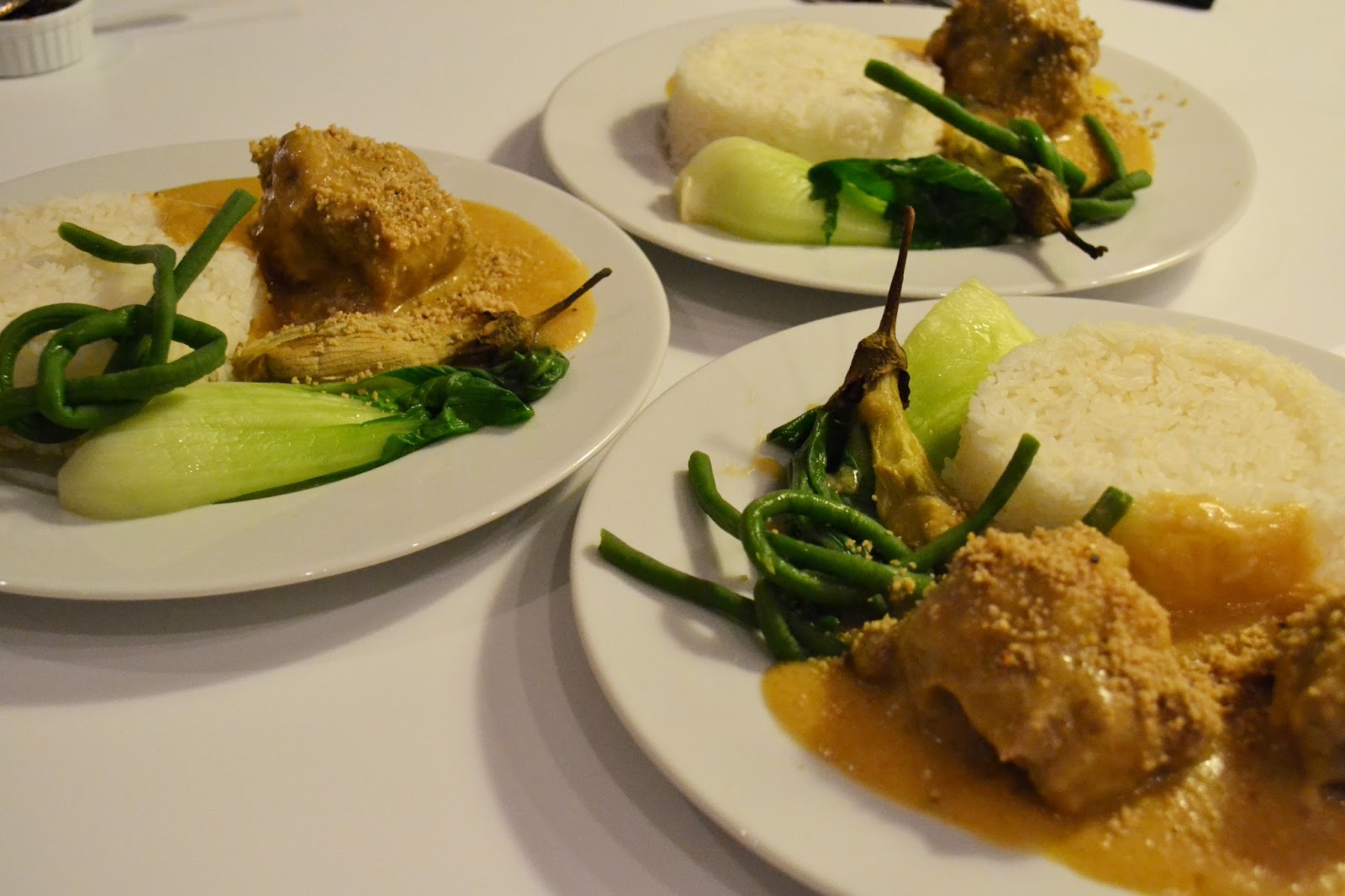
Her most popular dishes are Visayan “Humba”, “Kinilaw”, “Kare-Kare” and “Brazo de Mercedes”. She, too, produces homemade “Ube”, “Durian” and “Barakong Kape” flavored ice cream, bestsellers all in the restaurant.

In setting up the supperclub, Williams not only wanted Londoners to experience the best Filipino food in the city, she was also looking at an opportunity to share customers about Philippine history, culture and her growing up years in the Philippines.

While the Brits have heard about Asian cuisine, they have little knowledge about how good Filipino food is. Williams says. Thank God, times are changing.

“London’s foodie scene is beginning to embrace new cuisines, the trend is growing globally, and over in New York, Filipino cuisine is the latest emerging food trend. So, indeed, this is a great time to showcase Filipino food,” Williams says.

Homesick Pinoys find refuge in Williams’ place. The dishes she serves remind them of home, taking them back to their families and different Philippine regions.

For non-Filipinos or first timers, Williams says she would often hear positive comments. Like they would be surprised to know that Filipino food has depth, in terms of flavor and color. She has also observed that whenever British and European nationals would try Filipino food, they would always know what makes it distinct and then would try more.


Williams relates an interesting episode on her life as a Pinay chef in London:

While preparing for the launch of a Filipino rum brand in autumn of 2014, she noticed a casually dressed guy, wearing a baseball cap backwards, came into the kitchen shouting: “Whose kitchen is this? Whose kitchen is this?”

With a confused look on her face, she answered: “Uhm, the bar, Trailer Happiness.” To which the guy frowned and shouted: “No, who is in the kitchen? Who is here?”

By now she thought she was in trouble and said softly: “Pepe’s Kitchen.” The guy then laughed and shouted: “Yeah, I know, but who is cooking? Who do I speak to, who is the boss?”

By now, she really felt on the spot and told him: “I don’t know the owner of the bar, I haven’t met him!” while her staff was watching, not knowing what to do. The guy then asked: “Who do I speak to about Pepe’s Kitchen? Who is the boss?”


She then laughed, realizing what the guy meant and said: “Me, I am, you can speak to me.” He handed her a business card and introduced himself as the owner of Trailer Happiness Bar.

He said he would like to discuss with her to man the bar’s kitchen on a more regular basis because of her delicious Filipino “pulutans” (finger food). That led to a 3-month chef residency, and the dishes she whipped up every single day became blockbusters on the menu.

By this time, her delectable creations and culinary wizardry would spread by word-of-mouth. No less than the Philippine Embassy in London contracted her to serve food for visiting dignitaries on many occasions.

When “It’s More Fun In the Philippines” ad campaign was launched in the city, the scrumptious food she served stole the show, putting her and Filipino cuisine on the spotlight.

Managing the business

Williams manages everything in “Pepe’s Kitchen” from A to Z. She actually built the website herself, as well as produced the graphics and acted as its photographer.

“I use social media regularly and try to blog as much as I can. When possible, I experiment with Filipino dishes and flavors. In running my events, I manage the stocks and finances, too. I’m also a wife and mother to two little girls. That’s how busy I am,” she says.

Along the way, Williams met many British-Filipinos looking for their own cultural identity and closer connection to home. Among them was Kristian Kabuay, a “baybayin” (pre-Spanish Filipino alphabet) expert, who eventually designed and incorporated “baybayin” graphics into her logo.

Doing well in London’s restaurant scene, “Pepe’s Kitchen” recently partnered with some Filipino brands to cater to high demands for Filipino food, while also putting ample attention to her supperclub baby.
Pioneering Pinay chef

Williams is most proud of the people she had influenced after establishing her restaurants. They have become chefs who are now helping raise the level of awareness for Filipino cuisine in London.

Prior to launching “Pepe’s Kitchen”, Williams was featured on UKTV with John Torode (of UK Masterchef fame), one of the rare times people saw a Filipino cooking on UK tv.

Born in Pasay and lived in Quezon and Batangas provinces until seven, Williams’ attended Immaculate Concepcion School in Baybay, Leyte. She and her younger sister migrated to UK when she reached fourteen, petitioned by her mother who had been working in London for many years.

They lived in Sevenoaks, Kent and only moved to greater London when she attended St. Charles College. She is married to a second generation Filipino, Adrian Williams, a digital media expert who is successful in his own right.

As a self-employed Pinay, Williams manages herself professionally. “When I employ people, I believe in being fair as I have high standards and strong work ethics,” she says.

Upbeat on Pinoy cuisine

Williams considers Filipino cuisine as the next big thing. “Filipinos are on UK tv, they are in every hospital and are successful in most of the things they do. Our presence is definitely being felt in the UK,” Williams proudly exclaims.

For Filipinos who want to be successful in London, her advice: “Be proud of your culture and do not feel inferior to anyone else. There’s more to Filipinos than the stereotypes, all we need to do is just show them,” she says.

Having lived in the UK for many years, Williams have learnt that doing things properly is far more effective than cutting corners. “Quality over quantity is the key to success,” she adds.

Her take on discrimination issue: “London is such a cosmopolitan city that people are really interested in learning new cultures than live in the past.”


She notes that there are more Filipinos in London now. “This includes children of OFWs and their children who look Filipino but are British,” she says.

From roughly 18,000 in 1986, Filipino population in the UK has ballooned to about 250,000 in 2011 and now counts to almost 400,000.

Birmingham, Liverpool, Manchester, Bristol, Leeds and Barrow-in-Furness have significant number of Filipino communities with Greater London home to the largest number of Filipinos.

Hardworking husband

Mae’s husband Adrian works in sales and business development of digital advertising. In 2014, he co-founded a Mobile Tech Startup in London, which has become hugely successful.

According to him, London is the financial centre of EMEA (Europe, the Middle East and Africa). When other industries and companies develop globally, London usually gets involved. In the digital space, London is often the gateway to the US and likewise the gateway for US companies into EMEA, similar to Singapore in Asia.

Both Adrian and Mae are very active as founding members of “Philippine Generations”, a non-profit organization and supplementary school aiming to inspire young Filipinos to bring them culturally closer to the Philippines.
“We are children of migrant workers or OFWs. Many people, especially in the Philippines, forget that their “kababayans” go abroad to work and send money back home,” Adrian says.

“One day, these OFWs will retire and return home, no longer sending money back. They often leave behind children, who grow up as Filipinos in the countries of their birth, often earning 3-4 times what their parents earned, raising their own families and in the process, losing their identity,” Adrian laments.

The two, together with three other second generation Pinoys in the UK, aim to make a difference by educating them to be more aware of the Philippines thousands of miles away. Be it just learning about the culture, visiting the country, experiencing it more, getting involved in social issues or introducing Filipino food to the world like they do best.