A collection of ads I like and those I created as an adman. In between are some of my published articles about dreamers, achievers, those who reached for the stars, interviewed personally and through email. Hope their stories may inspire you a little.
Thursday, August 22, 2013
FILIPINO BRANDS: WINNING BIG IN SPORTS MARKETING
by Roger Pe
How many people still remember Yco and Ysmael Steel? For sure, baby boomers still do and their big followers still reminisce their unforgettable exploits on the basketball court.
The two dribbled their way to Filipino households because they had talk value. Their names enjoyed media presence and their star players’ heroics gave them word-of-mouth sizzle.
The names became not just names on jerseys, from among their ranks emerged Carlos Loyzaga, Tito Eduque, Kurt Bachmann, Robert Jaworski, Freddie Webb, Alberto Reynoso, Adriano Papa, Orlando Bauzon, Jimmy Mariano and a galaxy of other stars.
They became synonymous to the brightest in Philippine basketball that did the country proud in Asia and in the Olympics during that time.
Meralco, Crispa, Toyota followed suit and then Purefoods, Shell, Alaska. Now we have Ginebra San Miguel, Air 21, Petron, Talk ‘N Text, San Mig blazing the trail. Just like their predecessors, they enjoy round-the-clock brand presence and top-of-mind awareness from among millions of consumers.
Who would have thought Milo would eventually topple the seemingly unsinkable Ovaltine in their category war? The former, with its solid “Olympic Energy” positioning and focused campaign line, now reigns supreme as the undisputed market leader.
Credit it to relentless sports marketing and single-minded approach, the brand also made “Milo Marathon” an iconic word, eagerly anticipated by sport fans.
For decades, Marlboro basked in media glory made possible by the nationwide popularity of “Marlboro Tour” and “Marlboro Adventure”. Coke’s “Go-For-Goal” bred a lot of Pinoy footballers in the same way as soccer gave it added branding kick.
Shakeys today is synonymous to Philippine volleyball. The surging popularity of the sport is making its brand leadership unshakeable.
Alaska and Cobra are banking on the current rage - Triathlon for kids and professional athletes.
From ticket sales to licensed products, apparel, equipment merchandising and other promotional permutations, sports are a big business.
Everyday, hundreds of millions of sports fans watch sporting events, a gripping entertainment reality that brands all over the world consider as strategic marketing opportunities.
Super Bowl tops Forbes’ list of the world’s most valuable sporting events worth $379 million. Following the Super Bowl are the Summer Olympics ($176 million) and soccer’s World Cup ($103 million).
Nike, GE, Procter & Gamble, Adidas, Coke, Samsung, Panasonic, Dow, Omega, McDonald’s, Visa, BMW are just of the biggest brands queueing up to get into these events for these reasons: 100% captive audience, media and financial returns worth millions of dollars.
To give us interesting insights on the subject and real local market case studies, Business Friday interviews Ed Dames, an all-around athlete, fitness buff, martial arts enthusiast, Chairman and CEO of DTC (Direct-To-Consumer) Promos, one of the country’s leading companies specializing in sport roadshows, campus tours and women’s marketing, complementing many ad agencies’ activation programs.
Previously Events and Sports Marketing Director of Leo Burnett Manila in 2001, Dames, put up CEMG (Creative Enterprises Management Group) with corporate team building and special events as its core services.
One of his biggest projects was Close-Up’s “Whattamouth!”, a spectacular event with a daunting challenge: break the Guinness World Record on the largest photo mosaic in a billboard. The event easily broke the UK record and set a new high in mounting an event for a billboard unveiling.
Dames and his team literally stopped the world on that part of Makati by using the MRT as a viewing deck and deployed the legendary Air Force 505 (Search and Rescue team) to strip the billboard cover. It ended with the first-ever fireworks display on Edsa featuring the World Pyro Festival champion, La Mancha.
BF: Briefly, how does a brand benefit from sports marketing?
ED: “By associating with a particular sports or a sports personality, a brand gets instant recognition. Of course, sports marketing must be part of an Integrated Marketing Communications to optimize its value.”
BF: Does it benefit only sports enthusiasts?
ED: “No. Fans of the Olympics for instance are not necessarily sports enthusiasts. But they watch and support it because of the many things it brings: human drama, the fanfare, the celebration of the human spirit.”
BF: How do you effectively reach your target audience and keep their support?
ED: “By doing your homework as a professional marketer, knowing what keeps them excited, their habits, their aspirations, their social circle. Then matching it with the sport that best represent their lifestyle.
For example, light beers are very ubiquitous in Mixed Martial-Arts shows like the UFC. The reason is obvious: people who watch fights enjoy the show while drinking light beers with their friends.
Fights are now viewing parties. The message: drinking light gives you the ability to enjoy life more!
BF: If marketers want to use it as strategy, what advise can you give before plunging into action?
ED: “Do your research. Keep your personal bias and ego out of the picture. Find a good fit with a sports event that you can own and build a campaign around.
Compare its benefits with other available platforms. Have a clear metric to evaluate whether the sports you’ve chosen helped your marketing objectives or not. Sponsor only events organized by people with proven track record.
BF: What is its biggest advantage?
ED: The appeal of sports is universal. It cuts across social, economical and geographical boundaries. Some sports appeal to a specific sector. It’s more economical than traditional advertising.
BF: How well is it adapting to digital age?
ED: “Sports has adapted very well into the digital age. All the major sports organizations use social media as a key strategy in engaging with their fans.
Sports personalities maintain tweeter, Instagram and FB accounts where they can interact with their supporters. UFC president Dana White gives real-time updates of UFC happenings … including championship fights … with his million followers.”
BF: How do you describe sports marketing in the Philippines, in general?
ED: “It’s still not based on solid marketing strategies. Often, sponsorships are based on the personal bias of a brand manager or a corporate executive.
A case in point is the penchant for sponsoring fun runs.
While it is good to promote a healthy lifestyle thru running, no one remembers the other sponsors of fun runs apart from a chocolate drink, a sport wear and a sports watch.
Everyone else is just a second-rate copycat. Why would be brand want to spend millions just to be a “gaya-gaya”? If a brand would approach me, I would advise doing non-traditional fun runs. How about backward running?
BF: What is your trademark sports management style?
ED: “I’m a go-getter. I get excited about big challenges. I take on a new pitch as sports competition and I prepare my team accordingly.
How do you apply sports in running your business?
Sports is about setting new goals and going for it. My personal philosophy is also our corporate credo: “whatever it takes!” For as long as it’s not illegal or immoral, we’ll do it for our clients.
We’ve set records for doing things never been done before. On hiring, we give plus points for applicants who are into sports. Athletes have discipline and focus. They don’t get sick easily and they carry themselves better.
BF: What drives you professionally and personally?
ED: “Doing things with social relevance and eternal significance. I’m now in a legacy-building mode.”
Es Dames has over 30 years experience in Advertising and Events/Sports Marketing. He worked with McCann, Basic Advertising and Leo Burnett. He is also Director of World Team USA that is promoting “Fight for Peace”, an international Muaythai and MMA Super Fights to be held at Resorts World Manila on October 23, 2013.
Thursday, August 1, 2013
TWINKLE, TWINKLE STARCOM
By Roger Pe
In the past, the stars of ad agencies were the creative people. From their minds, ideas sprung up and became ads we saw, heard, remembered, liked on newspapers, radio and tv sets.
They were called hotshots, had the perks, behaved differently and management gave them fat salaries, and even a lot of leeway for some of their idiosyncrasies.
Some people say, ad agencies won’t survive without them. In the landscape then, media people were in separate departments when those outside the creative department were playing second-fiddle roles.
That was the case until the 90s.
It’s the other way around now - media agencies keep one important thing that creative agencies don’t: the purse strings.
A space literally separates creative and media agencies. Though they may be under one holding company, they do not belong to one roof anymore and function independently of each other.
A media department strategically plans where and when your advertising message should appear and helps you buy the space or airtime to put your message, an almost clerical job.
With the explosion of new media channels, mostly due to advances in digital world, ad agencies needed to have multiple efficiencies, like strategic planning, research, buying clout, social media strength, digital thinking and expertise like content development, mobile media versatility and more.
Today, media departments have evolved beyond their previous definition and have become ‘communications agencies’. They do more than just tell you where to put your message or when to put it.
Mark Pollard, a well-known media blogger and strategy director, puts it more appropriately:
“The trends in media agency world are fascinating. It is trying to do to advertising what Facebook is trying to do to the Internet: Own it.
It is doing production that only creative and digital agencies used to do. It is doing data crunching that only CRM/DM (Customer Relations Marketing/Direct Mail) agencies used to do. It is bringing in creative directors and some are doing brand strategy,“ he says.
The landscape change has made media agencies new stars in their own right, providing not only media but also wholistic communication solutions to marketing problems. They have even metamorphosed into giant global networks.
Among the biggest names are Mindshare, UM (Universal McCann), Zenith, OMD (Omnicom Media) and Starcom, and most of them are present locally.
In the Philippines, Starcom MediaVest Group ranks the biggest. It started operating in Manila in the mid-2000s and has won the pinnacle achievement any media agency could aspire for - the 4A’s Media Agency of the Year, three times in a row.
SMVG’s sweeping victory in last week’s 4As Agency of the Year Awards was very significant for two reasons: it marked the agency’s return to the top of Philippine advertising media, winning the prestigious award for the 4th time and under its new CEO.
“I owe my first grandslam to all my hardworking staff,” says Joanna Mojica, CEO of the resurging media agency that recently bagged the huge Unilab AOR (Agency of Record) business against equally big multinational media networks.
Mojica joined SMG in 2006 with over 15 years of experience in media and advertising agencies like GroupM, Mindshare and JWT Philippines. She steered leading commercial corporations to market leadership, among them The Coca-Cola Export Company.
Business Friday interviews Mojica, advertising budget steward of some of the country’s biggest brands, the woman who talks ‘beauty’ in numbers, market data and graphs, and most importantly, brings in the results.
BF: If I were an advertiser why would I choose Starcom?
JM: “Every agency has its own proprietary tools, we all have our own business philosophies but advertisers should look beyond words splashed over credentials.
At the end of the day, corporate disciplines are just pieces of paper, if you don’t deliver.
If you ask our current clients, we have 100% client retention and I am proud to say that our clients have never left us.
I should say that we are very consistent with every facet of our work. Our proven partnerships with clients are solid.
We do our homework and do it well, whether it’s a competitive landscape, understanding ROI, or having an in-depth grasp of analytics.
We have key knowledge about the best markets, their important demographics, even their competitors and what resonates with their consumers.
Our track record is the only proof. We sparkle like a luminous star because we don’t promise the moon and the stars.”
BF: What is Starcom's point-of-difference against other media companies?
JM: “Because we are part of a global network recognized for media creativity, our standards are high, our momentum never slips.
We are strong collectively and our strength doesn’t lie on one person alone.
Starcom is a showcase of our strength. We are number one and successful because of the value that we give to clients.”
BF: Everyone is talking about digital and social media? Are they really effective, a fad or temporary?
JM: “They are your auto-audience and there is so much to unravel in digital advertising, specially on social media.
They’re changing people’s behavior so fast that you cannot ignore the tremendous opportunity to explore and utilize them to reach consumers and market brands at lightning speed.
They are so effective that in seconds, millions of people get to know who you are, what you are, what you did, what’s new, what’s in, what’s happening, what’s currently in vogue, wherever you are in the world in real time. Embrace it or be totally left out.”
BF: What do you see in Philippine advertising a few years from now?
JM: “Today, digital is only one of the many supporting media arteries. Tomorrow, everything will be different. All traditional media will revolve around it and advertisers will call it the Muscle Media.”
The more incisive media agencies will focus more on consumers. I personally believe that the best way to reach the masses is through agencies like us with deeper understanding of the market.
It will save us from being left in the dust by the constant technological advances that produce new forms of media.”
BF: What’s your management style?
JM: “I am like a sponge. I utilize the skill of a great leader – the power of listening.
The more people talk, the more I listen. When it’s time for me to talk, I have perfect knowledge and grasp of the big picture.
I may not know all the answers but I think, this is the best way to approach a situation.
The simple act of listening can change people’s behavior. When you are listening to somebody, completely, attentively, then you are listening not only to the words, but also to the feeling of what is being conveyed, to the whole, not only part of it.”
BF: How do you work as a boss?
JM: “For me, no single day is the same so I don’t function the same.
We live in an industry with a complex environment. I live within the dynamism of that environment. Where media partners come in different sizes and shapes, I adjust to them and become like them.
I love to unlock a person’s fullest potential. It challenges me to really listen and be a catalyst, know what a person’s passion, and to be able to help him or her become successful.
I value relationships because, here, you learn so much about life. We may quarrel but we’ll always come back to each other, learning from each other in more ways than one.
Who I am is a collective 20 years of experience of having worked with the best in the industry. I was shaped by the good and positive sides of all my mentors, I learned from every single of them.”
BF: Who is Joaana Mojica outside of the office?
JM: “I catch up being a mom whenever I am home. I consider going to a supermarket heaven.
My family is a source of strength and an important part of my being. Many facets of myself revolve around my family.
Last July 26, at the 4A’s Agency of the Year Awards, SMVG brought home three awards: the Best in Business Performance, Best in Media Creativity and proclaimed Media Agency of the Year, for delivering significant benefits to clients amidst an ever-changing media environment.
In the past, the stars of ad agencies were the creative people. From their minds, ideas sprung up and became ads we saw, heard, remembered, liked on newspapers, radio and tv sets.
They were called hotshots, had the perks, behaved differently and management gave them fat salaries, and even a lot of leeway for some of their idiosyncrasies.
Some people say, ad agencies won’t survive without them. In the landscape then, media people were in separate departments when those outside the creative department were playing second-fiddle roles.
That was the case until the 90s.
It’s the other way around now - media agencies keep one important thing that creative agencies don’t: the purse strings.
A space literally separates creative and media agencies. Though they may be under one holding company, they do not belong to one roof anymore and function independently of each other.
A media department strategically plans where and when your advertising message should appear and helps you buy the space or airtime to put your message, an almost clerical job.
With the explosion of new media channels, mostly due to advances in digital world, ad agencies needed to have multiple efficiencies, like strategic planning, research, buying clout, social media strength, digital thinking and expertise like content development, mobile media versatility and more.
Today, media departments have evolved beyond their previous definition and have become ‘communications agencies’. They do more than just tell you where to put your message or when to put it.
Mark Pollard, a well-known media blogger and strategy director, puts it more appropriately:
“The trends in media agency world are fascinating. It is trying to do to advertising what Facebook is trying to do to the Internet: Own it.
It is doing production that only creative and digital agencies used to do. It is doing data crunching that only CRM/DM (Customer Relations Marketing/Direct Mail) agencies used to do. It is bringing in creative directors and some are doing brand strategy,“ he says.
The landscape change has made media agencies new stars in their own right, providing not only media but also wholistic communication solutions to marketing problems. They have even metamorphosed into giant global networks.
Among the biggest names are Mindshare, UM (Universal McCann), Zenith, OMD (Omnicom Media) and Starcom, and most of them are present locally.
In the Philippines, Starcom MediaVest Group ranks the biggest. It started operating in Manila in the mid-2000s and has won the pinnacle achievement any media agency could aspire for - the 4A’s Media Agency of the Year, three times in a row.
SMVG’s sweeping victory in last week’s 4As Agency of the Year Awards was very significant for two reasons: it marked the agency’s return to the top of Philippine advertising media, winning the prestigious award for the 4th time and under its new CEO.
“I owe my first grandslam to all my hardworking staff,” says Joanna Mojica, CEO of the resurging media agency that recently bagged the huge Unilab AOR (Agency of Record) business against equally big multinational media networks.
Mojica joined SMG in 2006 with over 15 years of experience in media and advertising agencies like GroupM, Mindshare and JWT Philippines. She steered leading commercial corporations to market leadership, among them The Coca-Cola Export Company.
Business Friday interviews Mojica, advertising budget steward of some of the country’s biggest brands, the woman who talks ‘beauty’ in numbers, market data and graphs, and most importantly, brings in the results.
BF: If I were an advertiser why would I choose Starcom?
JM: “Every agency has its own proprietary tools, we all have our own business philosophies but advertisers should look beyond words splashed over credentials.
At the end of the day, corporate disciplines are just pieces of paper, if you don’t deliver.
If you ask our current clients, we have 100% client retention and I am proud to say that our clients have never left us.
I should say that we are very consistent with every facet of our work. Our proven partnerships with clients are solid.
We do our homework and do it well, whether it’s a competitive landscape, understanding ROI, or having an in-depth grasp of analytics.
We have key knowledge about the best markets, their important demographics, even their competitors and what resonates with their consumers.
Our track record is the only proof. We sparkle like a luminous star because we don’t promise the moon and the stars.”
BF: What is Starcom's point-of-difference against other media companies?
JM: “Because we are part of a global network recognized for media creativity, our standards are high, our momentum never slips.
We are strong collectively and our strength doesn’t lie on one person alone.
Starcom is a showcase of our strength. We are number one and successful because of the value that we give to clients.”
BF: Everyone is talking about digital and social media? Are they really effective, a fad or temporary?
JM: “They are your auto-audience and there is so much to unravel in digital advertising, specially on social media.
They’re changing people’s behavior so fast that you cannot ignore the tremendous opportunity to explore and utilize them to reach consumers and market brands at lightning speed.
They are so effective that in seconds, millions of people get to know who you are, what you are, what you did, what’s new, what’s in, what’s happening, what’s currently in vogue, wherever you are in the world in real time. Embrace it or be totally left out.”
BF: What do you see in Philippine advertising a few years from now?
JM: “Today, digital is only one of the many supporting media arteries. Tomorrow, everything will be different. All traditional media will revolve around it and advertisers will call it the Muscle Media.”
The more incisive media agencies will focus more on consumers. I personally believe that the best way to reach the masses is through agencies like us with deeper understanding of the market.
It will save us from being left in the dust by the constant technological advances that produce new forms of media.”
BF: What’s your management style?
JM: “I am like a sponge. I utilize the skill of a great leader – the power of listening.
The more people talk, the more I listen. When it’s time for me to talk, I have perfect knowledge and grasp of the big picture.
I may not know all the answers but I think, this is the best way to approach a situation.
The simple act of listening can change people’s behavior. When you are listening to somebody, completely, attentively, then you are listening not only to the words, but also to the feeling of what is being conveyed, to the whole, not only part of it.”
BF: How do you work as a boss?
JM: “For me, no single day is the same so I don’t function the same.
We live in an industry with a complex environment. I live within the dynamism of that environment. Where media partners come in different sizes and shapes, I adjust to them and become like them.
I love to unlock a person’s fullest potential. It challenges me to really listen and be a catalyst, know what a person’s passion, and to be able to help him or her become successful.
I value relationships because, here, you learn so much about life. We may quarrel but we’ll always come back to each other, learning from each other in more ways than one.
Who I am is a collective 20 years of experience of having worked with the best in the industry. I was shaped by the good and positive sides of all my mentors, I learned from every single of them.”
BF: Who is Joaana Mojica outside of the office?
JM: “I catch up being a mom whenever I am home. I consider going to a supermarket heaven.
My family is a source of strength and an important part of my being. Many facets of myself revolve around my family.
Last July 26, at the 4A’s Agency of the Year Awards, SMVG brought home three awards: the Best in Business Performance, Best in Media Creativity and proclaimed Media Agency of the Year, for delivering significant benefits to clients amidst an ever-changing media environment.
Wednesday, July 31, 2013
THE VILLAGE PEOPLE: NO PROBLEM WITH EFFICIENT CELLPHONE SIGNALS
By Roger Pe
Let’s face it, you chose to live in an exclusive subdivision because you are protective of your family.
You want to be in a quiet neighborhood, a self-contained community that has its own school, round-the-clock security, supermarket, sports facilities, traffic-free roads, a hundred other perks and amenities, and one thing that money can’t buy. Peace of mind.
To have peace of mind, however, you also need seamless connectivity to the outside world via call, text or the internet.
You want unbeatable phone and internet services where you can enjoy clear and uninterrupted phone conversations, real time text messaging, as well as fast and reliable internet connection.
You want your area safe for residents from robbery, burglary, intrusion, fires, even during typhoons as they will have a better chance of reaching help via their cell phones.
Sadly, life is not perfect even to those who live in gated villages.
In fact, residents of several exclusive neighborhoods, including expatriates working for their respective embassies and multinational companies in the Philippines complain about poor cellphone signals.
But why does it happen to residents of eason: Residents and respective homeowners’ associations of such villages do not permit mobile service providers to put up cell towers inside their turf because cell phone towers are not aesthetically designed and may ruin their sanctuary’s landscape. A much bigger reason looms on the horizon, exposure to radio waves.
But homeowners need not worry anymore. A new innovation from Globe Telecom eliminates the huge and unsightly typical cell sites but still provides excellent indoor and outdoor coverage. It is called the Outdoor Distributed Antenna System (ODAS).
The ODAS solution requires no massive structure. Instead, it effectively brings coverage much closer to residents through installation of lampposts that blend in residential areas with height and aesthetic restrictions.
The design is future-proof and can be integrated with newer technologies such as Wi-Fi, FTTH (Fiber to Home), and LTE (Long Term Evolution), which may be upgraded to fit the coverage requirements of the village.
The posts can be erected along the streets or within village parks. They brighten roads while enhancing mobile coverage .
On concerns about possible health hazards of cell sites. Do cell sites really pose any harm to people living within the area due to radio frequency radiation?
Scientific evidence studied by government groups have shown that there is no indication that radio frequency signals coming from these cell towers are harmful. The data lean more towards no harm rather than possible harm.
Various countries adopt a wide-ranging standard for cell site radiation, which is anywhere from 450 to 1,000 microwatts per square centimeter.
Based on available evidence, it is clear that radio frequency signals from cell sites do not pose any adverse health impact. In fact, one is likely to get more radiation from an MRI (magnetic resonance imaging) test than from cell sites.
No less than the World Health Organization (WHO) has clarified that radio signals emitted for cell phone services are classified nonionizing radiation, which is relatively harmless like those coming from AM-FM radios or baby monitors, compared to ionizing radiation from x-ray machines, which are deemed to carry higher health risks.
Furthermore, WHO maintains that there is no conclusive evidence associating exposure to radio signals from cell sites of wireless networks with adverse health effects.
With the new generation ODAS technology and the assurance that cell sites do not pose any health risks to people, there is no longer any reason why residents of exclusive villages cannot have the kind of service Globe subscribers all over the country are enjoying.
Wednesday, July 24, 2013
WHO'S ART DIRECTING MANILA'S BILLBOARDS?
(As it appeared in Mumbrella, specisl thanks to Robin Hicks)
While doing my usual morning rounds to check on emails and messages on social media, I saw a post on Facebook that read: “One step behind, that’s Philippine advertising. Billboards look like print ads, print ads look like leaflets, radio commercials are spoken print ads and TV ads are radio scripts with pictures.”
While some people might think that it’s a sweeping generalization, truth is, I have long wanted to make the comment that the heyday for billboards has passed, but held back for as long as I could, so as not to annoy friends in the industry.
But a former chief creative officer and CEO of a multinational ad agency beat me to it and validated my fears: billboards in Manila, indeed, are increasingly resembling leaflets or fliers, he says.
I would have to agree. While Manila has won Cannes Lions, Clios, One Show Pencils and Spikes, is home to many talented people, has a vibrant local creative awards show, and is one of Asia’s most prolific entrants to the world’s biggest advertising festivals, the city is flooded with billboards that look as if they were created by salesmen.
Choke me to death seems to be the covenant when local Gods of outdoor media descended into this tropical eden. Words are aplenty. Layout chaos is the order of the day. Forget about the awards book.
Suffocate every available white space seems to be the standard rule.
Mix and match (or ‘halo-halo’ as we’d say in the Philippines) the fonts. The more, the merrier, it seems. Could it be because halo-halo is also a favorite Pinoy dessert?
The city has seen many great, globally applauded campaigns like Coca-Cola’s 60 X 60 foot ‘Living billboard’, a sign made up largely of living plants, which absorb carbon dioxide (made by McCann WorldGroup Philippines).
Ogilvy Manila's Ponds billboard
Ogilvy Manila’s Ponds billboard
Ogilvy Manila produced a number of category-breaking outdoor ads for Pond’s way back in 2007, including a red light on the cheek of a woman’s face that lit up like a pimple. Sad to say, bad billboards dominate the good on Manila’s cluttered skyline now.
And as skyscrapers boom and mushroom in the city, the bad ones grow in number. One only needs to cruise along a stretch of Edsa (Manila’s busiest highway), from Monumento to SM North to Cubao, Shaw, Boni and Guadalupe to see the spectacle of screaming billboards.
Many marketers, even some advertising practitioners, today seem to think that a billboard peppered with lots of hard-sell messages will be more effective. Not so. They just cause more accidents and traffic chaos on the road.
Thursday, July 18, 2013
WHAT MAKES AN AD EFFECTIVE AND WIN A WORLD TITLE?
by Roger Pe
A product so good will sell without advertising. Word of mouth will fan the flame but it can only do so much.
Creative advertising, as relevant as it is interesting, will make the categorical difference.
It will multiply sales figures many times over, boost profits and take the brand to charts advertisers never imagined.
A product so bad will nose-dive as soon as it’s launched.
The sad story is, no amount of advertising will increase its market share. On the contrary, it will only hasten its untimely demise, as more and more people will discover how bad it is.
Rather than expose its flaws, it’s wiser to invest on product improvement. In a sea of brands, nothing beats brand superiority.
A damn good product is the alpha and omega of effective advertising.
Whether on digital, social media, below or above the line, or through guerilla tactics, advertising, cut-through advertising that is, is a potent marketing strategy. When you are target-focused and your message has a single-minded proposition, it also becomes a double-edged sword.
A great product is a creative sparkplug, a fountain of ideas that can trigger boundless executions, a surefire formula that can make cash registers ring merrily, continuously, and to effect what every marketer wants. Sales.
How does the biggest advertising festival in the world choose the most effective ad campaign then? Here’s a brief rundown:
In Cannes’ Creative Effectiveness competition, and as the category suggests, an entry cannot win by creativity or effectivity alone, or without the other. It’s effectivity that is creative and creativity that brings in the numbers.
Many marketers, even advertising practitioners today still have that mistaken notion that an effective ad is an ad that have loads of hard-sell copy, big price balloons, a product freight that barks the brand name more than three times and you can sweep creativity under the rug. No.
Cannes is Cannes, and here, entries must be creatively outstanding from a strategic standpoint. More importantly, it must have shown a proven impact on a client’s business backed by real and audited figures.
Cannes Creative-Effectiveness has become an essential part of an ad industry trend that recognizes actual marketing effectiveness with great creativity.
“As ad agencies continue to face client adspend uncertainties and they’re pressured to prove they can boost the client's bottom line, as well as produce a great-looking ad, ad festivals that focus on this become very relevant,” a local ad agency CEO stresses.
According to Guy Murphy, JWT Worldwide Planning Director and Cannes Creative-Effectiveness judge, Cannes Creative-Effecftiveness Lion is difficult to win.
“There were 142 entries in 2011, and only six winners were picked,” he says. He advises prospective entrants to focus on proving the actual effect of the campaign when writing the case study, ahead of the campaign's creativity or strategy.
Proving effectiveness, above all, is now a numbers game. Using consumer data from a variety of sources is essential. "You'll need more numbers than you think. A few quotes from consumer focus groups and one percentage figure won't get you very far,” he adds.
To be able to qualify in Cannes Creative Effectiveness Lion, a campaign must have already been shortlisted or won in the immediate preceding year, been judged and established as creatively world-class.
Entries are rewarded 25% for strategy, 25% for creative idea and a big 50% chunk for market results. The fee is €1,225 per entry, roughly 69,800 pesos.
The rules clearly stipulate that ads must have been made with prior written permission from client, owner of all rights written in the entry form. Entrants must provide organizers with a ready copy of that permission.
All entries must have been made within the context of a normal paying contract, meaning, the client must have paid for all, or majority of the media/production costs.
The rules are strict. Cannes provides stringent measures, such as:
All entries must be submitted for judging exactly as published, aired or implemented and may not be modified for awards entry. It is common knowledge that, locally and internationally, some ad entries are different from what actually came out on media.
A full media schedule and other proofs are to be attached to the entry form to verify authenticity of the work in the event the entry is shortlisted or becomes a winner. In cases of complaints against any winning or shortlisted entry, the organizers conduct a full investigation.
Deliberation
Judging is done by the best minds in the industry, some of them multiple Cannes winners themselves, who have “been there, done that.”
The process is Hollywood-style. A welcome party starts the ball rolling. Introductions of rules come next and the judging proper begins.
The jury looks at entry case videos and every physical piece. They are usually looking for simple ideas, smart but not confusing execution, unusual strategy, and most important of all, the measurable results.
A former Cannes jury member gives this advice: “Nobody reads long body copy and preparing your presentation case study intelligently could improve chances of winning. Showing numbers in results and not in percentages, also works better.”
A jury head does not vote, but only acts in cases of deadlocks. Votes are then shown on screen. This year, only the Grand Prix winner was chosen.
If an ad agency entry is up for the top plum, its jury rep is asked to leave the room. When the results are up, a press conference follows and awards ceremony ensues.
How judges are chosen
Be a Cannes winner yourself and live in a Cannes-crazy country that sends lots of entries every year, that is de rigeur.
According to Phil Thomas, 6th time CEO of Cannes and responsible for naming judges to the festival, there are about 300 judges each year. He has named 1,800 judges during his term.
“If you’re a country that’s entering and winning big in a category, you’ve earned your right to have a jury member above a country that’s not entering and not winning.”
Countries that get the most judges are U.S., Brazil, U.K., Germany, France, Australia, India, Canada, Japan and China.
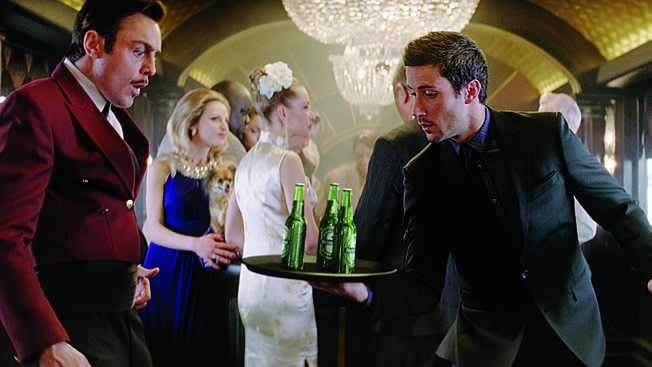
This year’s Cannes Creative-Effectiveness Lion winner is Wieden & Kennedy Amsterdam’s work for Heineken: "Legendary Journey: Justifying a Premium the World Over.”
The global campaign dramatized significant increases in market shares in every country it was being sold. Its most high-profile element was a highly detailed video, "The Date," in which a suave gentleman takes a beautiful woman for a legendary night out.
The guy shows off skills, ranging from fileting a fish to performing magic tricks. The campaign also included online integration, such as contests where entrants could try to win their own legendary dates.
Jury chairperson Shelly Lazarus, chairman emeritus of Ogilvy & Mather, cited a host of factors that contributed to the campaign's win. These included the difficulty in creating a global platform that translated successfully in widely varied local markets, the toughness of differentiation in the beer category, the inspired execution and idea, and the impressive results in driving sales, volume, and maintaining a price premium for the brand.
As the name suggests, the awards reward campaigns that marry creativity with business effectiveness. Pricewaterhouse independently audited all business results from 120 entries.
Seven campaigns picked up gongs in total, across a wide variety of sectors and fulfilling a broad range of business goals, explained Lazarus.
The Gunn Report, the annual compilation of the most awarded advertising campaigns in the world, makes conclusive findings: the more creatively awarded a campaign is, the more effective it becomes.
“They are more effective than non-awarded ones despite lower levels of ESOV, (Extra Share of Voice). Furthermore, highly creative campaigns are more reliable investments as they achieve broader levels of successes across greater number of business metrics,” it adds.
Thursday, June 27, 2013
THE CHAIRMOM WINS CANNES GRAND PRIX LION
by Roger Pe
As of the latest count, the world’s population is a little over 7 billion, more than 6 billion of which are mobile phone users.
The top three users are China, India and the US. If you’re curious, the Philippines ranks number 10 (106,987,098), bigger than its human population, based on Wikipedia’s list.
Americans replace their phones every 22 months, junking some 150 million old phones in 2010 alone.
Do you ever wonder what happens to old phones when they die? In China and India, for example, people pile e-waste and burn it so they can extract gold, silver and copper threads inside, which they sell to recycling merchants.
In the Philippines, millions of old, analog phones don’t end up as toxic waste but are reborn to create a new brand of textbook to make Filipino children learn to read fast.
Credit an ad agency that collaborated with authors and publishers to refine school lessons into 160-character messages and a telecom company that programmed them into inboxes of thousands of inactive surplus sim cards.
What turned out gave them amazing results: old analog phones became a new type of e-reader and old text sim cards became a new brand of textbook called “TXTBKS”.
A simple idea that catapulted the Philippines to win its first ever Grand Prix Lion, the highest creative award in the world’s biggest and most prestigious international advertising festival, Cannes.
Business Friday interviews the ‘Chairmom’ who’s given the Philippines’ its biggest advertising award so far, Merlee Jayme, Chair and Chief Creative Officer of DM9 JaymeSyfu, now the country’s poster ad agency. She also gives us interesting snippets from her rainbow-colored career.
BF: How did you start in advertising?
MJ: I had my practicum at JWT - then in Magsaysay building along Roxas Blvd. Jun Alcantara, who was heading the internship program asked each one of us one question: “Which department do you want to join: Accounts, Creative or Media?” Clueless just like the rest, I crossed out ‘Accounts’ thinking it would entail a lot of math.
I also crossed out ‘Media’ thinking that would get me exposed to showbiz and I was just too shy for that! So I finally chose ‘Creative’. I knew it would be perfect because I draw and I write.
Here, I got to experience writing and even presenting to real clients. But only when Mr. Jayjay Calero chose my team for the best ad campaign for Kodak did it dawn on me that this was my future career.
BF: Tell us about your early days in advertising, particularly Ace-Saatchi.
MJ: The day I was interviewed to be Mario Monteagudo’s partner was my most memorable. When I got in Ace Saatchi & Saatchi’s reception area in the old Rufino building, I noticed everyone was in high spirits.
In fact, there was a celebration. Then I gathered, there were creative teams who just came back from Bangkok and brought home the grand prize from their regional competition.
Mario, my future partner, was one of them. Seeing me sitting there, they called me and gave me a copy test: Their Bangkok competition brief!
After a short interview with Cid Reyes, which was so scary, I remembered Jimmy Santiago, the ECD then, telling me that I could bring the brief home to work on it.
Then something came over me. If I wanted this so badly, I should at least try to impress them. I demanded for an empty room, a pencil and some papers. I told them I’ll work on it that same day and will present before 5pm. I got the job.
That was 1989. It was also an Advertising Congress Year. I watched my creative colleagues endlessly go up the stage. It was the most inspiring feeling. I vowed to myself to learn, to work doubly hard and to catch up with these guys.
Under Mario’s guidance and patience, I won my first gold in the following Advertising Congress for Cocobank “Origami” TVC. That was the first time I felt I was truly “Saatchified”.
BF: To whom do you attribute your success, who influenced you so much?
MJ: Malcolm Gladwell would always refer our ‘training’ for excellence to “10,000 hours”. My “10,000 hours” for copywriting came from my 3 years with Mario Monteagudo. He was equally ruthless and fair.
He continuously pushed me to write the perfect headline, body copy and punch line everyday. It was absolutely impossible to be mediocre around him.
When a line isn’t funny enough or when a story isn’t memorable enough, you’re dead. So, I would always make sure to come up with something that will blow him away. And, if he saw an idea to be a very good one, he never hesitated in giving me the credit for it.
My “10,000 hours” for art direction was with Melvin Mangada. He was probably the country’s best Art Director. He had such a sharp eye that nothing-absolutely nothing escapes it.
Headlines too big, fonts are too playful, photos need more re-touching, and layout should be simpler. He had a flair for ideas perfectly executed.
My “10,000 hours” for leadership was with David Droga. I’ve never met a more charismatic guy. He was the type of leader who was so humble that he wanted all his teams to shine more than himself. Of course, that was a bit impossible in his case. He taught me how to bring out the best in everyone.
BF: How do you begin doing an ad, any mental ritual?
MJ: The brief is very important. I tell my creatives this every single time. First, when a brief is very complicated - with the message buried or has so many layers, my mind literally shuts down. So, it’s only natural that I give my inputs or will even re-write it if need be. It has to inspire us creatives.
First I ask, what problem are we here to solve? Which is the best way to solve it?
What is the best way to involve consumers?
Take note “involve” and not simply reach or create awareness. With digital, ambient and events, we try to stop thinking of conventional ways to ‘involve’ the target market. Then I open a bottle of red.
BF: Who is Merlee Jayme as a private person?
MJ: I’m a mom to four girls (with ages: 21,18,12,10) they’re like my friends. Every year I bring one daughter out of the country with me to spend some “just-us” time.
I’m a wife to Timmy, an ad agency COO. Our bonding time is usually an early morning run. We’ve joined 21k runs and love running in different parts of the world. On Friday nights though, no run can stop us from having a beer or two in a cozy bar somewhere.
Lastly, I’m a pretty religious person. Deep in my heart, I truly believe that He can give your talent today and He can take it away anytime, too. So I don’t take things for granted. I thank Him greatly for every award we win and for every pitch we lose.
I also make sure I come home in time to pray with my daughters before bedtime.
BF: What is your style of management?
MJ: They call me the “Chairmom” of DM9. Honestly, because that’s how my management style is, a little bit of a disciplinarian, hands on, and very nurturing. I am also very protective. Nothing angers me more than my DM9ers being treated badly or unfairly.
I also believe in leading by example. I take accountability to heart. So I’m never afraid of getting my hands dirty. I write, I board, I brainstorm, and I attend shoots. I come in early and leave late if I have to.
But being a creative myself, I have to say I have my usual “crazy” and “just want to have fun” moments. I come up with the weirdest ideas for agency team building, wear outrageous costumes and party hard.
BF: Now that you have achieved a Cannes Grand Prix, where do you go from here?
MJ: How I wish I could ‘rest’ a bit. The Cannes Grand Prix is simply a proof that we are on the right track in helping create change for the country and the world.
So, we have to continue on. We still have a big task ahead.
BF: Is there a formula in winning Cannes?
MJ: There are tips to make sure your entry is going to be understood by different nationalities. But I don’t think there are formulas, only great ideas. Every year, Cannes surprises us.
BF: What drives you as person and as Chair of DM9?
MJ: Maybe seeing my name on the door everyday makes me feel 100% responsible for so many people and the work.
As of the latest count, DM9’s has extracted the most precious metals from some of the world’s major award shows. No other ad agency at same age has achieved in its entire 8-year history.
2009
Campaign Brief Philippines Asia Agency of the Year
2010
Bestontv.com Ranked no. 9 in the world, and only Asian agency making the list
HALL OF FAME , Kidkat/Creative Guild
New York Festivals Creative Achievement Award
Gabriela "Nat Geo" - Finalist, Radio
NEW YORK FESTIVALS:
THE ONE SHOW:
Lasik Surgery "Before & After" - First cut, Poster
Music 1 "Obit Campaign" - First cut, Poster
Gabriela Philippines "Duct Tape campaign" - First cut, Ambient
CANNES LIONS:
Makati Fire Station "Match" - Finalist, Outdoor
Coppertone "Kobe" - Finalist, Outdoor
Coffee Dream "Parallel Universe" - Finalist, Radio
Coppertone "Speed" - Finalist Radio
THE WORK (inbook):
ProLife Philippines "Perspectives Campaign"
Extraderm Age-Defy "Clock"
Coppertone Sunscreen Lotion "Hidden Campaign"
Gabriela Spousal Abuse "Rope Campaign"
Coppertone Sunscreen Lotion "Emerge Campaign"
Makati Fire Station "Match"
2010
CANNES LIONS:
Silver, Outdoor for Mini Cooper
Finalists:
SPIKES:
Gold, Media for Gabriela “Bruise”
Bronze,
Bronze,
ADFEST:
Bronze, Outdoor Gabriela “Bruise”
2011
CLIO:
Bronze, Outdoor for Pharex
2012:
SPIKES:
Gabriela "Bury the Past" - Silver, Direct
Gabriela "Bury the Past" - Finalist, Digital
Gabriela "Manila Scandal Part 2" - Finalist, Digital
CANNES LIONS:
DOT & Smart Communications Domestic Tourism Campaign "Volcano" - Finalist, Outdoor
ABS-CBN Foundation Bantay Kalikasan "Mouse Deer" - Finalist, Press
ABS-CBN Foundation Bantay Kalikasan "Dugong" - Finalist, Press
CAMPAIGN BRIEF ASIA:
Direct Single Anti-Firecracker Campaign SFX
Outdoor Campaign Dept. of Tourism Volcano
Posters Campaign Vespa Scooters New York, Paris, Manila, Bangkok
Public Service Print Campaign Save Palawan Movement Pangolin, Mousedeer, Dugong
Public Service TVC Single Campaign Against Scandal Videos Hits
ADOBO DESIGN AWARDS:
Pharex "Cinema" - FINALIST, Best Design, Poster Category
Pharex "Opera" - FINALIST, Best Design, Poster Category
Pharex "Lecture" - FINALIST, Best Design, Poster Category
TANAW AWARDS:
Philippine Star "Truth" - Best in Creative Execution, OOH, Winner
AD STARS:
Gabriela "Hits" - Silver, Cinema, Public Service
Gabriela "Hits" - Finalist, Cinema, Diverse Insight
DIGITAL ASIA FESTIVAL:
Gabriela "Bury the Past" - GOLD, Best Use of Social Media
EPICA AWARDS:
Gabriela "Bury the Past" - GOLD, Public Interest Interactive
Gabriela "Bury the Past" - SILVER, Media Innovation
CAMPAIGN ASIA PACIFIC:
Agency of the Year 2012
2013
ADFEST 2013:
INTERACTIVE LOTUS
Best use of social media
‘Bury the Past’ GOLD,
Gabriela
PROMO LOTUS
Event & field marketing
Best use of social media
‘Bury the Past’ Gold
Gabriela
Direct ambient
Best use of social media
‘Bury the Past’Gabriela Silver
CANNES LIONS:
Grand Prix, Cannes Lion Festivals , 2013
Thursday, June 20, 2013
PHILIPPINES: GRAND PRIX IN CANNES AT LAST
by Roger Pe (First of 2 parts)
What if you could use millions of old, analog phones to create a new brand of textbook?
This was the germ of an idea that catapulted the Philippines to win its first ever Cannes Grand Prix Lion in the ongoing Cannes international festival of advertising creativity.
And so, the smartest idea wins it.
To put it simply, the purest idea reminds us all once again that it can conquer the world and make the world believe.
No Hollywood special effects in the mold of “Iron Man”, no state-of-the-art equipment to create mind blowing animation, no first world technology and talents to do the trick. Just an idea so relevant it made a lot of impact.
By this time, the whole advertising world is still heady over DM9 JaymeSyfu’s conquest of Cannes Grand Prix Mobile Lion introduced last year.
For those who are used to daily fare of slick and beautifully produced ads, DM9's entry will not even impress the jaded Cannes habitué.
Why, it looks like a powerpoint market case study. But there lies the sting. Skim through the surface and beyond the ordinary is a huge idea laced with the greatest of intentions: Make many Filipino school children learn to read fast.
The natural veneer of DM9’s “TXTBKS” made it shine the brightest in a category that drew over 100 technology-driven entries from first world countries, clearly one fine example of the agency's mantra: Small but credible. And if we may add: Relevant.
Advertising global bible Ad Age describes it as: “A clever way of using old-school technology. Rather than replace old analog cellphones, the agency dreamt of a way to make them beneficial to citizens.”
How DM9 did it.
It looked no further but right into the country’s state of education, where unlike in developed countries, tablets and e-readers have become the solution to large, voluminous heavy textbooks.
“We were working on a Smart project involving children and learning. We realized one of the ideas we'd brainstormed could be used to solve a bigger problem. That idea would become “TXTBKS,” says Merlee Jayme, Chair and Chief Creative Officer of DM9 JaymeSyfu ad agency.
Jayme and her team were aware of the need: how to make technology relevant to schools and make it easily accessible.
“Mobile is where digital is headed—in fact, many would say mobile is where it's been the past few years already. And it's where the most exciting advances are being made. Naturally, perhaps some were expecting technical pyrotechnics,” Jayme says.
But you see nothing of that sort in DM9’s case however. “What we simply set out to create was a solution to a problem,” she adds.
In DM9’s study, it found out that even the cheapest tablet model is worth more than what their families make in a month. Most families own one or two old analog mobile phones, used mainly for texting.
It also noted that kids as young as seven must bring up to 22 books every day, leaving them physically exhausted and unfocused even before their first class—and in many documented cases, afflicted with scoliosis.
The solution: "Make text light and easy".
Over six months, the agency collaborated with textbook authors and publishers to refine official school texts into 160-character messages.
They were then programmed into the inboxes of thousands of inactive surplus sim cards, which were then repackaged into new Smart TXTBKS.
What turned out gave them amazing results: the oldest analog phones became a new type of e-reader and old text sim cards became a new brand of textbook.
Results
A quarter after it was launched in partner schools that needed it most, the simple, low-tech solution made a sustainable impact.
School bags became 50% lighter, classroom attendance increased to 95% while average test performance went 90% during implementation.
Petitions and pledges from schools, families, and education sector members grew. TXTBKS literally went places, with more subjects and grade levels, rolling out across the Philippines.
Rei Inamoto, VP-chief creative officer of AKQA, an ad agency specializing in digital services and jury chair.
On Ad Age, jury members said that the simplicity of DM9’s work was what made it win. “I think it’s an unexpected Grand Prix winner. It’s not the most technically advanced entry, and in fact, it’s a little bit backward.”
Xavier Laoureux, head of the Digital Arts Network at TBWA, said what was “interesting about it - is that it’s the best way to show you can have a mobile idea without pushing the technology side of it. It was not using technology as the end.”
A total of 59 Mobile Lions were awarded, nine of them were Gold, not including the Grand Prix winner.
All nine Gold Lions were good enough to have won the Grand Prix, Mr. Inamoto said, but in the end, the balance tilted in favor of DM9’s “TXTBKS” entry because, at the end of the day, Mr. Inamoto said his suggested definition of Mobile Advertising was, “Is it portable? Is it connected? And is it pervasive?”
Credits:
Agency: DM9JaymeSyfu
Chair and CCO: Merlee Jayme
ECD: Eugene Demata
ACD/Copywriter: Aste Gutierrez
ACD Digital: Buboy Paguio
AD: Buboy Rayong
Account Supervisor: Alex Syfu
Account Manager: Ina Vargas
Producer: Carlo Perlas, Tower of Doom
Editor: Melo Samson, Tower of Doom
DM9 JaymeSyfu is part of DDB Group Philippines, whose Group Chairman and CEO is Gil G. Chua. It was Campaign Asia-Pacific Agency of the Year and is named after one of the most creative agencies in the world, DDB DM9 Brazil.
Subscribe to:
Posts (Atom)
Blog Archive
-
►
2008
(451)
- February (71)
- March (153)
- April (26)
- June (3)
- July (39)
- August (40)
- September (24)
- October (35)
- November (33)
- December (27)
-
►
2009
(132)
- January (15)
- February (8)
- March (9)
- April (2)
- May (3)
- June (2)
- July (14)
- August (13)
- September (16)
- October (7)
- November (36)
- December (7)
-
►
2012
(52)
- January (4)
- February (6)
- March (4)
- April (2)
- May (2)
- June (19)
- July (2)
- August (2)
- September (4)
- October (3)
- November (4)
-
►
2013
(28)
- January (3)
- February (1)
- March (2)
- April (4)
- May (2)
- June (3)
- July (3)
- August (2)
- September (2)
- October (2)
- November (3)
- December (1)
-
►
2015
(52)
- January (2)
- February (1)
- March (16)
- April (13)
- May (4)
- June (1)
- July (1)
- August (2)
- September (1)
- October (3)
- November (3)
- December (5)
-
►
2016
(37)
- January (10)
- February (5)
- March (4)
- April (1)
- May (2)
- June (1)
- July (3)
- August (2)
- September (2)
- October (3)
- November (1)
- December (3)